Power Supply System: Everything You Need to Know
What Is a Power Supply System?
A power supply system is a network of electrical components designed to distribute electricity to consumers, whether at a local level (for homes or buildings) or at a large-scale level (powering entire cities or industrial zones).
Power supply systems can be classified based on several factors:
Type of current and frequency: AC/DC, 50Hz, 60Hz, or industrial 400Hz.
Neutral grounding configuration: Isolated, solidly grounded, or compensated.
Configuration type: Centralized, decentralized, or hybrid.
Power reliability category: Ranges from Category 1 (critical loads like hospitals) to Category 3 (non-essential loads like residential buildings).
Purpose: Main, backup, emergency, standby, stationary, portable, or mobile power supply systems.
Main Components of a Power Supply System
A power supply system consists of several key elements, each responsible for specific functions:
✅ Power Source - This can be a hydroelectric (HPP), nuclear (NPP), thermal (TPP), solar, or wind power plant.
✅ Transmission Lines - Includes overhead or underground high-voltage cables and household wiring.
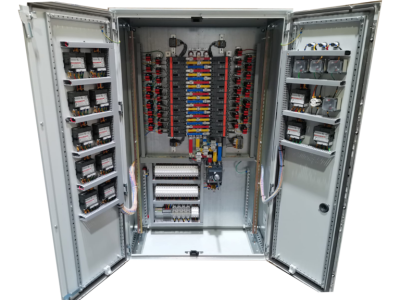
✅ Energy Conversion Systems - Transformers, rectifiers, voltage stabilizers, and frequency converters.
✅ Automation and Protection Systems - Circuit breakers, surge protectors, and relay protection for fault detection and system stability.
✅ Control and Monitoring Systems - Includes smart meters, SCADA systems, and remote energy management tools.
✅ Support Equipment - HVAC systems, cooling systems, lighting, and other infrastructure required for electrical distribution stations.
Modern power supply systems do not typically include backup power sources. However, many businesses and homeowners add their own generators, UPS systems, and solar panels to ensure uninterrupted power supply.
Designing a Power Supply System
A properly designed power supply system must operate under normal, emergency, and post-emergency conditions.
The complexity of the design depends on the type of building or facility:
Residential homes - Simple designs with one-stage planning.
Commercial buildings - Require two-stage planning for reliability and efficiency.
Industrial plants or supermarkets - Require three-stage planning with detailed engineering calculations.
Stages of Power Supply System Design
1️⃣ Technical and Economic Feasibility Study
- Determines the cost-effectiveness of the project.
- Compares different power supply configurations.
2️⃣ Preliminary (Concept) Design
- Ensures compliance with architectural, environmental, and functional requirements.
3️⃣ Main Design Development
- Defines project costs and technical feasibility.
- Does not include excessive detail but ensures practical implementation.
4️⃣ Detailed Design (Working Project)
- Used for technically simple facilities with pre-approved solutions.
- Ensures compliance with urban planning, environmental, and safety regulations.
5️⃣ Technical Documentation Preparation
- Includes electrical schematics, calculations, and legal permits.
- Ensures adherence to building codes and industry standards.
Before designing the system, surveying work must be conducted to determine the best placement of power lines and distribution panels, ensuring they comply with safety distances from other structures.
Installation of Power Supply Systems
Once the project is designed and approved, the next step is installation.
Step 1: Procurement of Components
Before installation begins, all necessary electrical equipment must be selected, including:
✔ High-voltage equipment
✔ Cables and wiring
✔ Switches, circuit breakers, GFCIs, and surge protectors
✔ Lighting equipment
✔ Generators or alternative power sources (if applicable)
All equipment must comply with safety regulations and quality standards.
Step 2: Site Preparation and Documentation
Contractors receive full project documentation, including:
✅ Electrical schematics
✅ Construction plans
✅ Work permits
The site manager supervises the installation team to ensure compliance with safety regulations.
Step 3: Equipment Installation
- Main electrical panels, transformers, and power distribution units are installed first.
- Power lines are laid (either overhead or underground).
- Protective devices and automation systems are integrated.
Overhead power lines require poles and suspension structures, whereas underground power lines require trenching and insulation.
Commissioning and Testing
Once the system is installed, it must undergo thorough testing before being put into operation.
Commissioning Process
1️⃣ Preparation of Technical Documentation
- The contractor prepares test reports and compliance certificates.
2️⃣ Power Connection and Equipment Calibration
- Voltage, frequency, and protective relay settings are configured.
- The entire system is energized and monitored for performance.
3️⃣ Performance Testing
- Tests include:
- Transformer cooling efficiency
- Short-circuit protection response
- System load balancing
Once all tests are passed, the system is approved for operation.
Power Supply System Maintenance
Regular maintenance ensures that power supply systems remain safe and efficient.
Routine Maintenance Includes:
✔ Real-time system monitoring
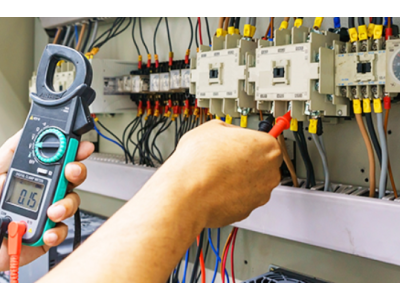
✔ Rapid troubleshooting of electrical faults
✔ Preventive maintenance (replacing aging components, adding new circuits)
✔ Inspection of distribution panels, circuit breakers, and automation systems
✔ Replacement of damaged cables, transformers, or other worn-out equipment
Maintenance schedules depend on the type of power system:
Underground cable networks:
- Inspected every 3 months for buried cables.
- Cable vaults and high-voltage terminals checked every 6 months.
- Low-voltage connections (<1kV) inspected annually.
Overhead power lines:
- High-voltage lines inspected monthly.
- Low-voltage lines inspected annually.
- Concrete poles checked every 6 years (soil excavation required).
Keeping Records
All inspections and repairs are documented in a maintenance log.
Any defects found are scheduled for immediate repair.
Final Thoughts: Ensuring a Reliable Power Supply System
✅ Proper design and installation ensure system stability.
✅ Regular maintenance prevents failures and electrical hazards.
✅ Automated monitoring and smart energy management improve efficiency.
Takeaway: Whether for residential, commercial, or industrial applications, a well-designed power supply system is the key to safe, uninterrupted energy distribution.