Security and Fire Alarm Elements: A Detailed Overview
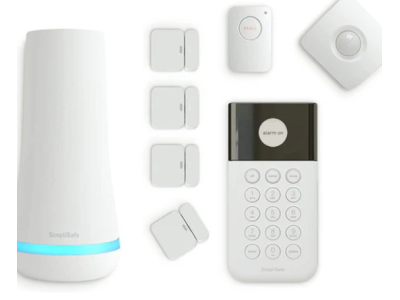
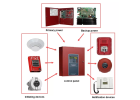
In the United States, ensuring the safety of homes, businesses, and public buildings is a top priority. At safsale.com, we recognize that effectively protecting a property in the US often hinges on a well-designed security and fire alarm system. Although security (intrusion detection) and fire alarm setups each serve different purposes, they typically share the same basic components:
- Detectors (Sensors)
- Control Panels
- Power Supplies
- Notification Devices (Sounders, Flashers, etc.)
Beyond these core elements, auxiliary devices such as arming/disarming units, remote indicators, and network modules may be added to expand functionality. Below, we’ll discuss the main types of security and fire detectors, how they operate, and the key role of control panels in both systems. By understanding these fundamentals, US homeowners, facility managers, and security professionals can make the best choices for comprehensive protection—whether it’s a small shop in a suburban area or a large commercial complex in a busy city.
Security Alarm Sensors
Security sensors (or “intrusion detectors”) are designed to detect the unauthorized opening of doors, windows, or other building structures, as well as the breaking of glass or other means of forced entry. At safsale.com, we frequently work with customers across the US seeking these specific sensor types to safeguard their properties.
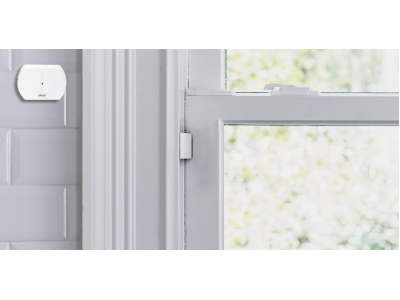
1. Magnetic Contact Sensors
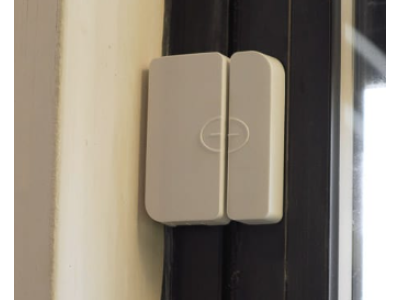
Magnetic contact sensors are a popular choice throughout the US due to their reliability and affordability. A typical setup includes a reed switch (“reed contact”) and a magnet. When the door or window is closed, the magnet holds the reed contacts in a particular state (normally closed). Opening the door or window causes the magnet to move away, changing the reed switch’s state and triggering an alarm. US homeowners find them especially useful for main entrances, basement doors, and sliding windows.
2. Acoustic (Glass-Break) Sensors
Acoustic sensors detect the unique sound signature of breaking glass. They use a built-in microphone and specialized signal processing to recognize the initial low-frequency thud (the impact) followed by a high-frequency “shatter” sound of splintering glass. This two-stage detection method significantly reduces false alarms, a critical consideration in the US where emergency services or private security companies respond to any triggered alert.
3. Vibration Sensors
Vibration sensors typically contain a piezo element that reacts to repeated impacts or drilling on walls, floors, or even metal grates. In many US applications—such as safes, secure storage rooms, or server racks—these sensors help detect forced attempts at penetration. They must be tightly affixed to the surface they’re monitoring, a common requirement for critical facilities nationwide.
4. Shock-Contact Sensors
Shock-contact sensors can trigger an alarm from a single sharp impact to a surface (like a window or door). They’re often mounted directly onto glass, making them less desirable for buildings with high design standards, since visible mounting can disrupt aesthetics. Consequently, many US property owners opt for acoustic detectors if they want to preserve a clean, modern appearance.
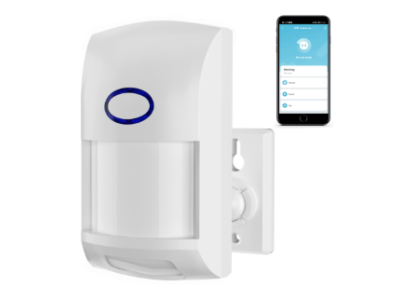
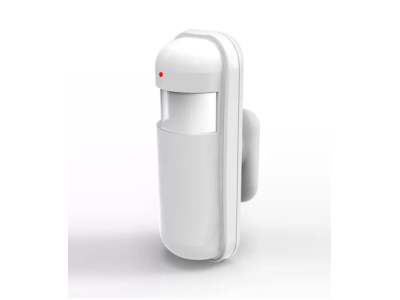
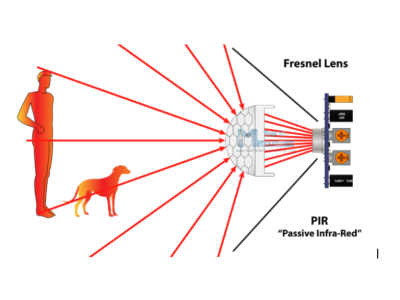
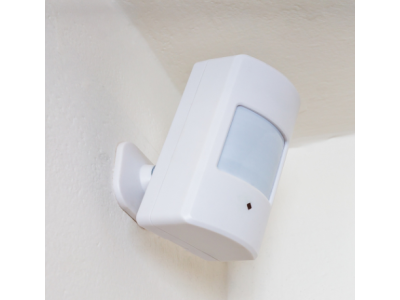
5. Motion Detectors (PIR, Microwave, Ultrasonic)
Motion sensors detect movement within a protected zone. They may use:
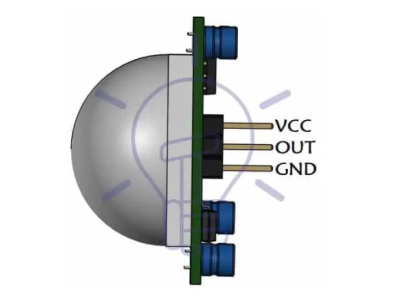
- Passive Infrared (PIR): Senses changes in infrared energy when a human body or large warm object moves in the space.
- Microwave (Radio-Wave): Transmits microwaves and measures reflection changes caused by motion.
- Ultrasonic: Emits sound waves at frequencies above human hearing, detecting movement based on wave reflections.
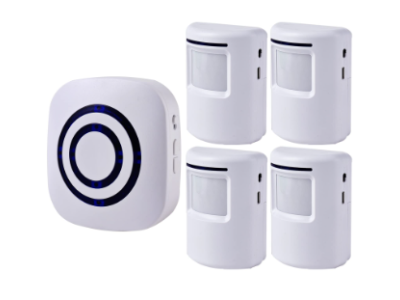
In the US, motion detectors are extremely common in both residential and commercial applications. These sensors can have “volumetric,” “surface,” or “linear” detection zones, making them versatile for corridors, living rooms, or perimeter fences.
Fire Alarm Sensors
While security sensors address unauthorized access, fire sensors handle factors that indicate a fire outbreak—smoke, heat, and open flame. At safsale.com, we help many US clients integrate fire detection into their overall safety plan. Proper fire alarm coverage is crucial since different properties face unique risks—restaurants in Chicago might need advanced heat detection for kitchens, while wood-frame homes in rural areas often prioritize smoke detectors.
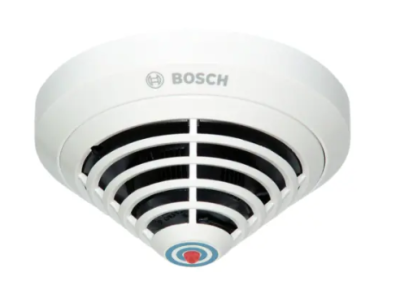
1. Smoke Detectors
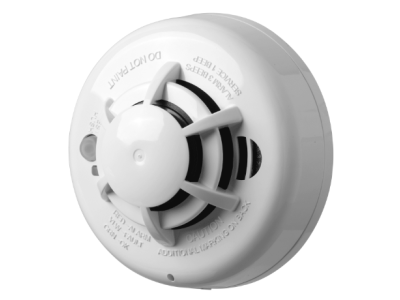
Smoke detectors can be optical (photoelectric) or ionization based:
- Optical: Uses a light beam inside a chamber; when smoke particles enter, they scatter light, triggering the sensor.
- Ionization: Uses a small amount of radioactive material to ionize the air inside a chamber, detecting smoke by changes in electrical conductivity.
These sensors may have point-type (localized) or linear (beam-type) detection zones, with linear beam detectors commonly installed in large, open spaces such as warehouses, gymnasiums, or shopping malls.
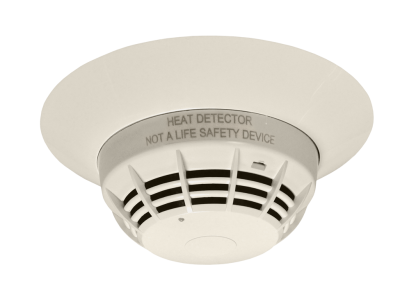
2. Heat Detectors
Heat detectors respond to abnormal increases in temperature. They fall into three categories:
- Fixed Temperature (Maximum): Triggers an alarm when the temperature exceeds a preset threshold (e.g., 135°F).
- Rate-of-Rise (Differential): Activates when there’s a rapid temperature increase over a specific time frame.
- Combination: Monitors both maximum temperature and rate-of-rise for greater accuracy and fewer false alarms.
Many US-based building codes stipulate heat detection in areas prone to temperature fluctuations or heavy cooking, such as commercial kitchens or parking garages.
3. Flame Detectors
Flame detectors react to ultraviolet (UV), infrared (IR), or visible-spectrum emissions from a fire. Because they have volumetric detection zones, they can cover larger areas, detecting open flames rapidly. In the US, flame detectors are often found in industrial facilities or chemical storage areas where a fast, robust response is necessary.
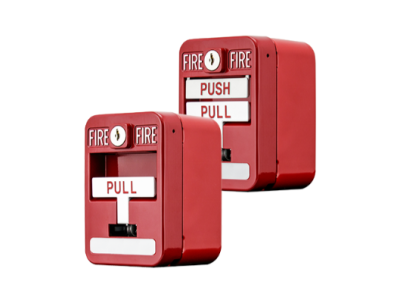
Every fire alarm system in the US also requires manual call points (pull stations). These allow occupants to sound the alarm immediately upon spotting a fire, essential for busy commercial buildings or campuses.
Control Panels (PCPs) for Security and Fire Systems
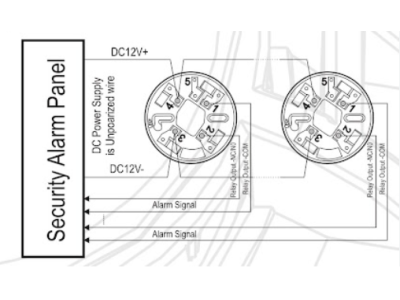
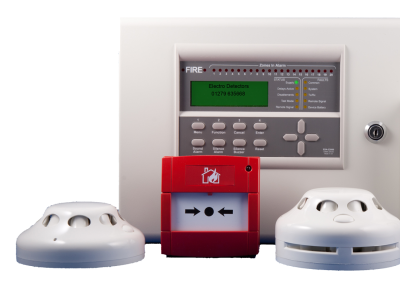
Control panels (or “panels” and “PCPs” in some documentation) serve as the central processing units for both security and fire alarm systems. They receive signals from sensors, interpret them, and trigger alerts or notifications. At safsale.com, we see a wide range of control panels being deployed across the US, from small-scale units for local family businesses to advanced, multi-zone panels for large corporate complexes.
Key Characteristics of Control Panels
Capacity (Information Throughput)
This refers to how many zones, loops, or individual devices the panel can support. Smaller US properties may only need a few zones, while extensive facilities like schools, multi-story offices, or shopping centers often require panels that handle dozens or even hundreds of addressable detectors.Output Notifications
Modern panels typically offer more than just “normal” or “alarm” states. In the US, it’s common to have indicators for conditions like:- Armed (security on)
- Disarmed (security off)
- Attention (maintenance or low-priority event)
- Fault (system malfunction)
- Fire Alarm or Intruder Alarm
Power Supply Options
US safety standards usually require backup power. Some control panels have built-in power supplies with batteries; others need a separate uninterruptible power supply (UPS). Since smoke detectors or advanced sensors often draw current from the panel, ensuring each device has consistent power during an outage is essential.System Types
Control panels can be:- PThreshold (Conventional): Sensors are grouped by zones (loops). If any sensor in a loop triggers, the panel reports an alarm for that entire zone.
- Addressable: Each sensor has a unique address, letting the panel pinpoint exactly which device triggered. This granular detail is particularly valued in the US for large complexes or multi-tenant buildings.
- Wireless or Wired: Wired panels rely on dedicated cables for each sensor or zone; wireless panels communicate via radio signals. Many US installations mix both to optimize costs and reduce installation complexity.
Additional Equipment for Comprehensive Protection
Keypads and Arming/Disarming Units
These devices let users arm or disarm the security system quickly. In the US, it’s commonplace to see numeric or touchscreen keypads placed near main entryways.Remote Indicators
External indicators or repeaters can display system status in hallways, guard stations, or building management rooms. For some US-based facilities with active on-site security, these indicators help staff respond faster.Communication Modules
Modules that send alerts to smartphones, monitoring stations, or off-site security teams are critical throughout the US, allowing immediate reaction to fires, break-ins, or other incidents. GSM modules, IP-based communicators, and cellular backup solutions are among the most requested add-ons at safsale.com.
Why Choose the Right System for the US Market
In the United States, selecting the right blend of security and fire alarm elements is not merely about meeting code requirements; it’s about ensuring people’s safety and safeguarding valuable assets. With larger homes, harsh climates in certain regions, and evolving standards for commercial properties, US residents and business owners need flexible, robust, and up-to-date alarm systems.
- Residential: Single-family homes, condos, and townhouses benefit from detectors tailored to typical US floor plans and building materials.
- Commercial: Offices, retail stores, and warehouses must address both burglary protection and stringent fire codes, making integrated solutions crucial.
- Industrial or Specialized: Factories, chemical plants, or data centers in the US often need advanced sensors (e.g., flame, gas, or humidity) and multi-zone addressable panels.
At safsale.com, we emphasize matching each client to a system that suits their property type, risk level, and budget. Whether you need simple door sensors or a cutting-edge addressable fire panel network, our team can guide you toward the ideal solution for your US-based project.
Final Thoughts from safsale.com
Both security and fire alarm systems share fundamental components—sensors, panels, power supplies, and notification devices. Yet each element must be chosen carefully to address the unique risks and building layouts found across the US. From magnetic contacts and acoustic glass-break sensors for intrusion detection to smoke, heat, and flame detectors for comprehensive fire protection, the right setup can greatly reduce false alarms while ensuring swift, effective responses.
Key Takeaways for US Customers:
- Select proper sensors based on your property’s specific needs—don’t overlook environmental conditions or building materials.
- Consider control panel capacity and addressable vs. conventional designs when protecting large or complex sites.
- Factor in backup power to remain operational during outages, a frequent concern in many US regions.
- Leverage modern communication modules for real-time alerts, ensuring that you or your security provider can act quickly.
By focusing on well-matched components and professional installation, your home or business stands a far better chance of staying safe from both intruders and fires. For more guidance, system reviews, and specialized US-based advice, head over to safsale.com, where we continually update our resources to help you make the best decisions for securing your property.