
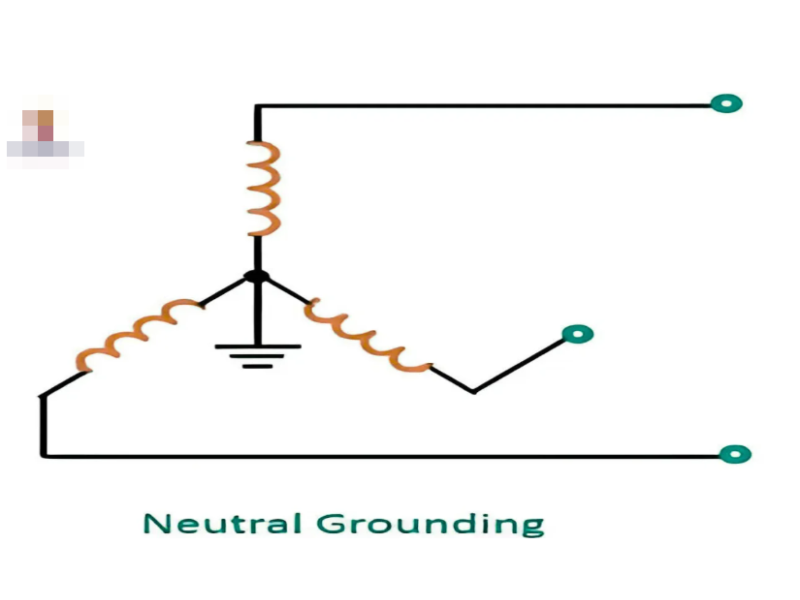
Neutral Grounding: Key Differences and Applications
What Is Neutral Grounding?
Neutral grounding is a critical component of electrical network design, affecting system reliability, personnel safety, and operational efficiency.
The choice of neutral grounding configuration depends on multiple factors, including:
✔ Voltage level
✔ Operating conditions
✔ Safety and reliability requirements
In modern electrical systems, two primary methods are used:
- Solidly Grounded Neutral (Direct Grounding)
- Isolated Neutral (Ungrounded System)
Each method has distinct advantages and is chosen based on the specific needs of the power distribution system.
Solidly Grounded Neutral: How It Works
A solidly grounded neutral means that the transformer or generator neutral point is directly connected to the ground with low resistance.
Why Use Solidly Grounded Neutral?
- Ensures rapid fault detection - High fault currents help quickly identify and isolate faults.
- Reduces overvoltage risks - Ground faults do not cause excessive voltage buildup on unaffected phases.
- Commonly used in low-voltage networks (up to 1 kV) - Provides straightforward protection mechanisms.
Advantages of Solidly Grounded Systems
✅ Fast fault detection and circuit disconnection
✅ Improved personnel safety
✅ Simple protection device setup (breakers, fuses, GFCIs)
Challenges of Solidly Grounded Systems
⚠ High short-circuit currents require robust protection devices.
⚠ Frequent interruptions - Even minor faults can cause system-wide shutdowns.
⚠ Increased stress on insulation due to high fault currents.
Isolated Neutral: How It Works
An isolated (ungrounded) neutral system has no direct connection between the neutral point and ground. The connection occurs only through phase capacitance in the network.
Why Use an Isolated Neutral?
- Minimal fault currents - A single-phase fault does not cause significant current flow.
- Continuous operation during ground faults - Ideal for industries requiring uninterrupted processes.
- Used in medium-voltage networks (6-35 kV) - Often found in industrial and critical infrastructure.
Advantages of Isolated Neutral Systems
✅ No immediate system shutdown due to single-phase ground faults
✅ Reduced short-circuit currents, reducing stress on electrical components
✅ Lower risk of arcing faults that lead to fires
Challenges of Isolated Neutral Systems
⚠ Requires continuous insulation monitoring to detect ground faults.
⚠ Risk of transient overvoltages during arcing faults.
⚠ More complex protective relaying is needed to detect faults accurately.
Solidly Grounded vs. Isolated Neutral: Key Differences
| Feature | Solidly Grounded (TN) | Isolated Neutral (IT) |
|---|---|---|
| Fault Current | High | Low |
| Protection Against Overvoltages | Excellent | Moderate (risk of surges) |
| Operational Continuity | Immediate disconnection required | Can operate with single-phase faults |
| Fault Detection | Simple, using overcurrent protection | Requires insulation monitoring |
| Use Case | Residential, commercial, and industrial low-voltage systems | Industrial, hospitals, and high-reliability systems |
Which Neutral Grounding System Should You Choose?
Choose Solidly Grounded Neutral (TN) if:
✔ You need simple fault protection.
✔ The network operates at low voltage (up to 1 kV).
✔ Quick fault disconnection is required for safety.
✔ The system supports high short-circuit currents with adequate protection devices.
Choose Isolated Neutral (IT) if:
✔ The system requires continuous operation (hospitals, factories).
✔ Ground faults must not cause immediate shutdowns.
✔ You need lower fault currents to protect sensitive equipment.
✔ Overvoltage risks can be managed with surge protection devices.