
Relay Protection: Types, Functions, and Key Requirements
What Is Relay Protection?
Relay protection is an automated system designed to detect faults in electrical networks and isolate faulty sections to prevent damage and ensure system stability.
As one of the core components of electrical automation, it is often referred to as RPA (Relay Protection and Automation).
Why Is Relay Protection Important?
✔ Prevents electrical failures by isolating fault zones
✔ Ensures power system stability
✔ Protects electrical equipment from overloads and short circuits
✔ Minimizes downtime by enabling rapid fault detection and response
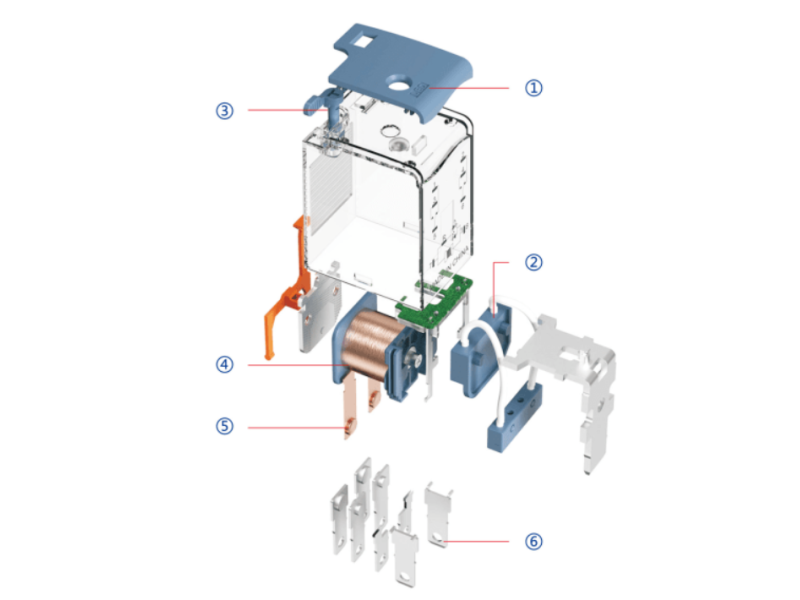
A relay protection system continuously monitors the power network parameters and consists of:
📌 Triggering devices (relays) - Detect faults and initiate a shutdown
📌 Measuring instruments - Monitor electrical parameters such as voltage and current
📌 Processing units - Analyze data and execute protection actions
Types of Relay Protection Systems
Relay protection is classified based on the parameter it monitors and the type of fault it detects.
1️⃣ Overcurrent Protection Relays
📌 Function: Detects excessive current caused by overloads or short circuits.
📌 How It Works: Compares the actual current with a preset threshold and disconnects the faulty circuit if exceeded.
✅ Used In: Power transmission lines, transformers, generators, and industrial motors.
2️⃣ Differential Protection Relays
📌 Function: Compares incoming and outgoing currents in a power system.
📌 How It Works: If there is a mismatch between input and output current (indicating a fault), the relay trips the circuit.
✅ Used In: Transformers, generators, and high-voltage power lines.
3️⃣ Gas Protection Relays
📌 Function: Detects gas accumulation inside oil-filled power transformers, which can indicate insulation breakdown or overheating.
📌 How It Works: If gas levels rise beyond a safe limit, the relay shuts down the transformer.
✅ Used In: Large power transformers with oil cooling systems.
4️⃣ Undervoltage Protection Relays
📌 Function: Prevents damage caused by low voltage levels in the system.
📌 How It Works: Disconnects the power supply if the voltage drops below a specified limit.
✅ Used In: Motors, industrial machinery, and sensitive electronics.
5️⃣ Distance Protection Relays
📌 Function: Measures the distance from the relay location to the fault in a transmission line.
📌 How It Works: Uses impedance measurement to detect faults at varying distances.
✅ Used In: High-voltage power transmission systems.
6️⃣ Arc Flash Protection Relays
📌 Function: Detects and isolates dangerous arc faults that could lead to fires or equipment damage.
📌 How It Works: Monitors sudden changes in current and temperature caused by arcs.
✅ Used In: High-voltage substations, switchgear, and industrial plants.
Key Requirements for Reliable Relay Protection
To ensure efficient and reliable protection, relay protection systems must meet the following criteria:
1️⃣ Selectivity (Discrimination)
📌 The relay must identify the exact faulty section and isolate it without affecting the rest of the power system.
📌 There are two types of selectivity:
✔ Absolute Selectivity: The relay only trips when a fault occurs in its own zone.
✔ Relative Selectivity: The relay may also respond to faults in neighboring zones.
✅ Example: A properly configured system ensures that if a short circuit occurs in a transformer, only that transformer is shut down-without disrupting the rest of the power grid.
2️⃣ Speed (Fast Response Time)
📌 The system must detect and clear faults as quickly as possible to prevent damage.
📌 The typical operating time for modern relay protection systems is 0.02 - 0.1 seconds.
📌 Fast response prevents:
✔ Overheating of equipment
✔ Voltage instability
✔ Cascading failures in power networks
✅ Example: Overcurrent protection relays in industrial plants can trip in less than 50 milliseconds to prevent fire hazards.
3️⃣ Sensitivity
📌 Sensitivity defines the relay’s ability to detect minimal faults in its protection zone.
📌 It is measured by the sensitivity factor (K):
📌 A high sensitivity factor (K > 1.5) ensures that the relay reacts correctly to faults even under low-load conditions.
✅ Example: In a power substation, differential protection relays must detect even minor insulation breakdowns to prevent large-scale failures.
4️⃣ Reliability (Fault-Free Operation)
📌 The relay protection system must operate without failures and ensure protection in all scenarios.
📌 Factors affecting reliability:
✔ High-quality components and circuits
✔ Redundant backup systems
✔ Regular testing and maintenance
✅ Example: Nuclear power plants require relay systems with a 99.999% reliability rate to prevent catastrophic failures.
FAQ: Relay Protection Explained
1️⃣ What is the difference between Overcurrent and Differential Protection?
📌 Overcurrent protection reacts to high current levels, regardless of location.
📌 Differential protection compares input and output currents to detect internal faults.
2️⃣ Why is Distance Protection used in power grids?
📌 Distance relays detect the location of faults, reducing the risk of blackouts in high-voltage transmission lines.
3️⃣ What happens if a relay protection system fails?
⚠ If a relay protection system malfunctions:
✔ Equipment may overheat and catch fire
✔ Power grids may experience cascading failures
✔ Electrical safety hazards may increase
4️⃣ How often should relay protection systems be tested?
📌 Power plants and industrial systems typically conduct relay testing every 6-12 months.
📌 Critical infrastructure (e.g., hospitals, airports) tests every 3-6 months.
Conclusion: Why Relay Protection Is Essential
✅ Relay protection ensures the safety and stability of electrical networks.
✅ Different types of protection prevent short circuits, overloads, undervoltages, and arc faults.
✅ Properly configured relay protection improves power grid reliability and prevents equipment damage.
📌 Takeaway: Whether for homes, industries, or power grids, a well-designed relay protection system is essential for modern electrical infrastructure! ⚡