
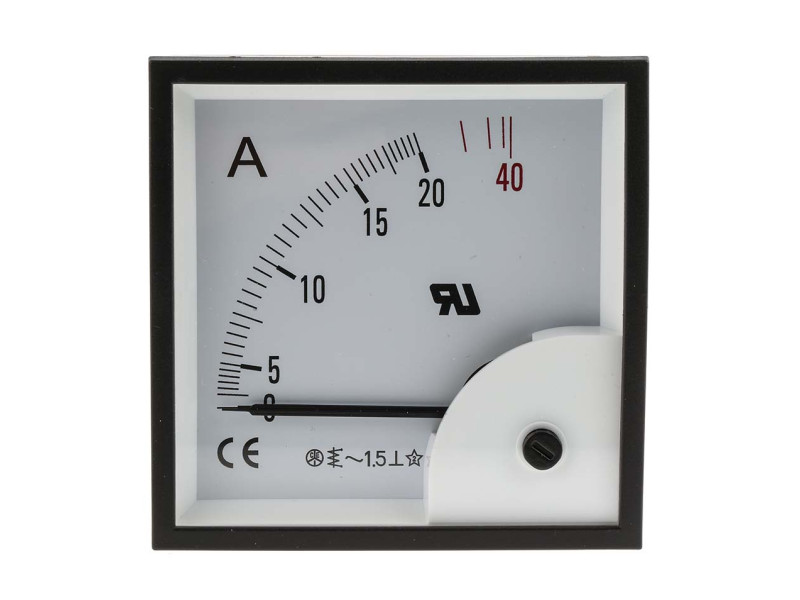
What is an Ammeter? Types, Connection Methods & Usage
An ammeter is a measuring instrument used to determine the electric current (amperes) in a circuit. It plays a vital role in electrical diagnostics, monitoring, and troubleshooting.
This guide covers:
✔ Types of ammeters
✔ How to connect an ammeter correctly
✔ Where ammeters are used
✔ Safety precautions for current measurement
1. What is an Ammeter?
An ammeter measures the flow of electric current (I) in a circuit and displays it in amperes (A).
Key Characteristics:
✔ Always connected in series in a circuit
✔ Measures both AC and DC current
✔ Comes in analog and digital forms
Example: A household circuit breaker panel often has ammeters to measure current consumption in different sections of the home.
2. Types of Ammeters
There are two main categories of ammeters:
Analog Ammeters
✔ Use a needle (pointer) on a scale to indicate current
✔ Reliable and does not require a power source
✔ Common in older electrical systems
Subtypes of Analog Ammeters:
- Magnetoelectric ammeter: For DC circuits only
- Electromagnetic ammeter: Works for AC and DC
- Electrodynamic ammeter: High accuracy, used in laboratories
- Induction ammeter: For AC circuits only
Digital Ammeters
✔ Display readings on an LCD or LED screen
✔ More accurate and easier to read
✔ Some models store readings or send data wirelessly
Subtypes of Digital Ammeters:
- Panel-mounted ammeters: Used in industrial control systems
- Clamp meters: Measure current without breaking the circuit
- Multimeters with ammeter function: Common for troubleshooting electronics
Which ammeter is better?
➡ Analog ammeters are rugged & simple, ideal for quick checks.
➡ Digital ammeters offer higher accuracy & modern features.
3. How to Connect an Ammeter
⚡ Important Rule:
✔ Always connect an ammeter in series with the circuit.
Direct Connection (for low currents)
1. Turn off power before connecting the ammeter
2. Break the circuit where current measurement is needed
3. Connect the ammeter leads in series
4. Turn the power back on & read the current
Example: Measuring the current in a small DC circuit (e.g., a battery-powered LED light).
Shunt Resistor Connection (for high currents)
✔ Used when the current is too high for the ammeter to measure directly
✔ A shunt resistor (low-resistance metal strip) is placed in parallel with the ammeter
✔ The ammeter measures the voltage drop across the shunt and calculates the current
Example: Used in automotive electrical systems and large industrial circuits.
Clamp Meter (Non-Contact Measurement)
✔ Measures current without breaking the circuit
✔ Works by detecting the magnetic field around a conductor
✔ Ideal for high-power or live circuits
Example: Used for troubleshooting industrial motors, HVAC systems, and high-voltage lines.
4. Where Are Ammeters Used?
✔ Household Circuits: Checking wiring loads and power consumption
✔ Industrial Power Systems: Monitoring machinery & generators
✔ Automotive Applications: Diagnosing alternators & battery currents
✔ Laboratories & Research: High-precision electrical testing
✔ Renewable Energy Systems: Measuring current in solar panels & wind turbines
Example: Electric vehicles (EVs) use ammeters to monitor battery charge & discharge rates.
5. Safety Precautions When Using an Ammeter
⚠ 1. Always start at the highest range setting
➡ Prevents overloading or damaging the meter
⚠ 2. Never connect an ammeter in parallel
➡ This can short-circuit the device & cause damage
⚠ 3. Use proper insulation & rated probes
➡ Ensures safety when working with high voltage circuits
⚠ 4. Disconnect power before connecting an in-line ammeter
➡ Prevents accidental electric shock
⚠ 5. Use a clamp meter for non-contact measurements
➡ Safer for high-current circuits & live wires
Example: When measuring a high-current motor, it's safer to use a clamp meter instead of inserting a direct ammeter.
6. Calibration & Maintenance of Ammeters
✔ Regular calibration ensures accurate readings
✔ Check for damaged wires or loose connections
✔ Clean dust and debris to prevent reading errors
✔ Verify accuracy with a reference meter periodically
Example: In industrial settings, ammeters are calibrated every 6-12 months to maintain precision.
7. Conclusion: Why Ammeter Knowledge is Essential
✔ Ammeter helps diagnose & prevent electrical issues
✔ Different types suit different applications
✔ Proper connection is crucial to avoid damage & ensure safety
✔ Regular maintenance keeps readings accurate
Understanding ammeters improves electrical troubleshooting skills & enhances safety in electrical work!
Related products from Safsale
Continue from Academy guidance to live equipment and components available on Safsale.


