
Resistor Calculation for LEDs: Step-by-Step Guide
1. Why Do LEDs Need a Resistor?
An LED (Light Emitting Diode) requires a resistor to:
✔ Limit the current to prevent burnout
✔ Ensure consistent brightness
✔ Match voltage supply with LED voltage drop
Without a resistor, the LED can overheat and fail due to excessive current.
2. LED Resistor Calculation Formula
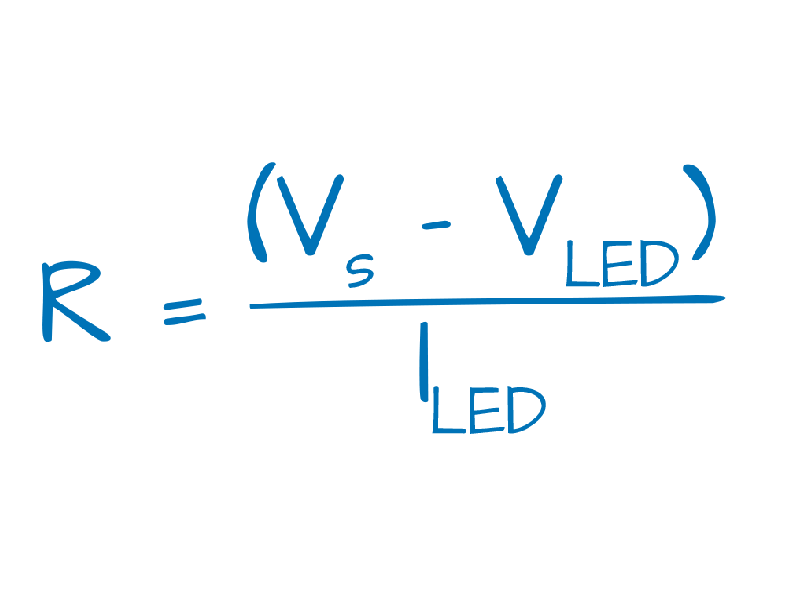
To find the correct resistance value (R), use Ohm’s Law:
Where:
✔ = Resistor value in Ohms (Ω)
✔ = Power supply voltage (V)
✔ = LED forward voltage (V)
✔ = LED operating current (A)
3. Example Calculation
Scenario:
You want to connect an LED with the following specs:
✅ LED forward voltage = 2V
✅ LED current rating = 10mA (0.01A)
✅ Power supply = 5V
Step 1: Calculate Resistance
Choose a standard resistor value: The closest standard resistor is 330Ω (E12 series).
4. Power Rating of the Resistor
To prevent overheating, calculate the resistor’s power dissipation:
Related products from Safsale
Continue from Academy guidance to live equipment and components available on Safsale.


