

A warehouse surveillance system should help answer specific questions: who entered a restricted area, which pallet moved through a loading bay, where damage occurred, and whether a recorded event can be reviewed clearly. Cameras can support loss prevention and operational review, but they do not guarantee that theft stops or that every employee follows a procedure.
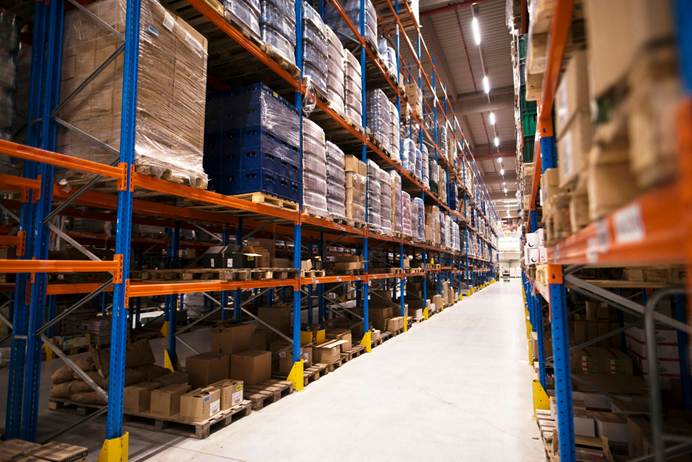
Start with the building layout, ceiling height, storage arrangement, vehicle routes, and lighting. Racks and stacked goods can block a camera that had a clear view when the warehouse was empty. The aim is documented coverage of priority areas, with known limitations, rather than an unsupported promise that a few cameras will eliminate every blind spot.
Compare analog, IP, and hybrid systems
Analog video over coaxial cable
An analog camera sends a compatible video signal to a DVR, which digitizes and records it for playback or network access. Existing coaxial cabling can make an upgrade economical when the cable, connectors, distance, and new signal format are suitable. Local recording does not require an internet connection.
Analog does not mean one fixed resolution or frame rate. Older standard-definition systems and newer HD-over-coax equipment differ substantially. Confirm the camera and DVR combination's supported format, recording resolution, and frame rate on every channel. A live picture on the monitor does not prove that the recorder is saving the same quality.
Installation may be straightforward in a small existing system, but it still involves mounting, power distribution, cable routing, and equipment configuration. High work areas, industrial traffic, electrical connections, and weather-exposed cable entries require appropriate skills. Neither a low price nor an analog signal makes installation safe for an unqualified worker.
IP video over a network
IP cameras encode video and send it over a network to an NVR, server, cloud service, or other supported destination. They can provide flexible resolutions, remote configuration, multiple streams, and analytics, depending on the model. A local IP system can also operate without internet access; internet service is needed for the remote functions that use it.
Network architecture can make expansion convenient, but additional cameras consume switch ports, power, uplink bandwidth, recorder capacity, and software licenses. Packet loss, congestion, poor wireless coverage, and device failures can interrupt video. Digital transport is not inherently immune to those problems.
Remote viewing from a phone, tablet, or computer requires a compatible client and a secure connection method. Confirm supported software and updates before purchase. Budget for configuration and ongoing administration rather than assuming that downloading an app completes the installation.
Hybrid systems and HD-over-coax formats
A hybrid system combines supported analog and IP cameras, often through a multi-format recorder or a video management platform. This can support gradual modernization while retaining useful cabling. Cost depends on what can be reused and what must be replaced; hybrid systems are not automatically more expensive or cheaper.
HD-CVI and HD-TVI are HD-over-coax video technologies, not themselves synonyms for a hybrid system. Compatible equipment may carry video and additional functions over coax, but resolution, audio, control, and distance depend on the specific products. HD-TVI is a transmission technology rather than a software update.
Do not design around a blanket claim that one format reaches 800 meters or another 500 meters without loss. Cable type and quality, resolution, terminations, interference, and manufacturer limits matter. Verify the complete link and test it at the required mode. A 4K-capable recorder also cannot make small objects readable if the camera view does not capture enough detail.
Choose resolution for the task and distance
Resolution influences the number of pixels available for a subject, but framing determines how those pixels are distributed. A wide overview and a close view of a shipping label are different tasks. A 1080p camera may be adequate for one view and inadequate for another; there is no universal warehouse minimum that guarantees readable faces, plates, or markings.
Prioritize detail at receiving stations, dispatch points, controlled entrances, high-value inventory areas, and locations where disputes are likely. Test actual labels, packaging, faces, or vehicles at the expected distance. Include motion and realistic lighting, not only a stationary target in an empty aisle.
Higher resolution generally adds demands on encoding, bandwidth, and storage at comparable settings. Decide whether the added detail is useful, then verify that the recorder supports it. Local memory-card recording can provide a supplementary copy on supported cameras, but capacity, endurance, overwrite behavior, and recovery after outages need attention.
Evaluate the sensor and nighttime image together
CMOS describes an image-sensor technology, not a guarantee of low power consumption or superior nighttime footage. Sensor design and size, pixel characteristics, lens aperture, processing, exposure time, and illumination all contribute to the result. Compare actual images under the conditions your warehouse will experience.
A day/night camera may switch to monochrome and use infrared illumination after the lights go off. Some applications need visible light to retain color information. Shelving, shrink wrap, reflective signs, and nearby walls can create bright reflections while deeper areas remain dark. Match the illumination pattern to the view instead of relying only on a quoted maximum range.
Read minimum-illumination specifications carefully
Lux measures visible illuminance. A camera's minimum-illumination rating describes performance under specified conditions, which may differ between manufacturers. Shutter speed, lens aperture, gain, acceptable noise, and whether the image is color or monochrome affect the rating. A lower number is not sufficient evidence of better moving-subject detail.
Long exposures can make a static scene look bright while blurring a walking person or forklift. Test movement at the exposure settings needed for the task. Infrared illumination can support nighttime imaging, but a claimed 100-meter range does not mean a label or face will be identifiable at that distance. Axis's lighting guide explains why illumination, reflections, and beam coverage must be considered together.
Match the lens and field of view to each zone
Field of view can be specified horizontally, vertically, or diagonally. It depends on the lens, sensor dimensions, and imaging mode. A wide-angle lens covers more area, while a narrower view concentrates pixels on a smaller area at a given distance. Compare the same field-of-view measurement when evaluating products.
A varifocal lens lets the installer adjust framing within its range. A motorized varifocal lens can simplify that adjustment from the software interface, especially at a high mounting position. Neither feature removes the need to check focus and retained detail after installation.
Use overview cameras to understand movement and dedicated detail views where a transaction or identification task demands them. A camera mounted near the ceiling may show the tops of heads or pallets rather than the faces or labels needed for an investigation. The best mounting position follows the task, subject path, and obstruction pattern.
Specify enclosure protection accurately
The IP ingress-protection code describes protection against solids and water under defined test conditions. Its first digit concerns solid objects or dust; its second concerns water. It does not provide a general operating-temperature rating. Impact resistance is a separate characteristic, commonly expressed through an IK rating.
| מאפיין | What it addresses | Warehouse check |
|---|---|---|
| IP65 | Dust-tight enclosure and protection against water jets | Match to the actual dust and water exposure |
| IP66 | Dust-tight enclosure and protection against powerful water jets | Check washdown and installation conditions |
| IP67 | Dust-tight enclosure and temporary immersion under specified conditions | Do not infer every other environmental capability |
| IK rating | Resistance to specified mechanical impacts | Consider reachable cameras and accidental contact |
| Operating temperature and humidity | Permitted environmental conditions | Check cold rooms, hot ceilings, and condensation |
ה Axis datasheet guide distinguishes ingress, impact, and environmental specifications. A clean, dry indoor area may need different protection from a dusty loading dock or washdown zone. Choose the enclosure for that exposure; the shape of the camera does not establish its rating.
Use analytics for defined events
Analytics can flag motion, line crossings, people in restricted zones, or other supported events. Counting and object-tracking functions may help review goods movement, but generic people counting does not automatically become reliable inventory counting. Test the actual packages, handling process, and camera angle.
Face detection indicates that a face is present; identifying a particular employee or visitor requires different capabilities and additional validation. Avoid treating automated labels as definitive evidence. Alerts should lead to review by an authorized person, especially when the result could affect an employee or a customer.
Motion-based recording can reduce storage, but a missed trigger can also mean missing footage. Consider continuous recording with event bookmarks in critical areas. Confirm pre-event and post-event recording, alert delivery, notification permissions, and what happens if the network or service fails.
Analytics may run in a camera, on a recorder or server, or in a cloud service. Edge processing can reduce the need to send video elsewhere for analysis, but it does not make network bandwidth irrelevant to live viewing, remote alerts, or centralized recording. Local processing and local storage are separate capabilities that must both be checked.
Choose wired or wireless links deliberately
Wired systems can use Ethernet cabling, fiber uplinks, or coaxial video links as appropriate. Ordinary surveillance video is not simply sent over building power wiring; specialized power-line or power-over-coax arrangements require compatible equipment. Protect cable routes from vehicle damage, interference, and environmental exposure.
A wired network can serve a large, branching warehouse installation and can be expanded when capacity and pathways are planned. Switches, uplinks, cabinets, and power distribution provide that structure. The need to install cable is a project cost, not evidence that wired systems cannot grow.
Wi-Fi, a dedicated radio bridge, or cellular connectivity may help where a cable route is impractical. Metal racks, changing stock levels, interference, and shared airtime can make performance unpredictable without a survey. Wireless data also does not mean wireless power: many cameras still require a local supply, and battery operation brings its own charging and recording limitations.
Check temperature, humidity, and maintenance access
A warehouse may contain ambient storage, refrigerated rooms, freezers, outdoor yards, and hot roof spaces. Select each camera and its accessories for the actual operating and startup temperatures, not the building's average temperature. Consider condensation when equipment moves between warm and cold air or when doors open.
Some installations need heaters or other environmental provisions, which affect power demand. A thermal camera is a device that forms an image from thermal radiation; it is not automatically a camera rated for extreme ambient temperatures. Its environmental specification must be checked independently.
Plan safe access for cleaning lenses and domes, inspecting seals, and servicing cable connections. Dust, insects, condensation, and moved stock can degrade an otherwise suitable installation. Maintenance requirements belong in the operating budget rather than being ignored until the first unusable recording.
Select housings and plan placement
Dome cameras can suit ceilings or walls when their adjustment range and lens match the view. Bullet cameras offer visible directional coverage, while box cameras allow flexible lens selection and may need a separate protective housing. A box shape alone does not make a camera resistant to moisture or dust.
PTZ cameras can pan, tilt, and zoom to inspect an event, but they see only the direction they are pointed at that moment. Use fixed views for locations that require uninterrupted coverage, and treat PTZ operation or automatic tracking as a supplement where appropriate.
Divide the facility into entrances and exits, receiving and shipping, storage aisles, workstations, high-value areas, and relevant utilities. Map the task for each camera, including coverage when racks are full and dock doors are open. Monitor work processes with appropriate notice and access restrictions; keep cameras out of private areas and review applicable employee-monitoring requirements.
Views of utility equipment can support investigation, but ordinary video does not replace required safety or equipment-monitoring systems. Document any remaining blind areas and the complementary controls that address them.
Size recording and storage, then test retrieval
Check channel count, supported camera formats, aggregate incoming bitrate, recording modes, decoding capacity, drive support, and software compatibility. The camera, network, and recorder together determine what can actually be retained and played back. Supported compression can save space, but the client must also decode it correctly.
Estimate storage from the configured bitrates and recording schedule, then allow for usable drive capacity, overhead, growth, and the desired retention period. Define who can search, export, or delete footage and how an incident copy is preserved before routine overwriting.
Before acceptance, retrieve a representative event from each priority zone and confirm that the saved footage answers the intended question. Compare suitable מצלמות, מערכות הקלטהו... displays as parts of that complete workflow.
Related products from Safsale
המשך מהדרכת האקדמיה לציוד חי ורכיבים זמינים על Safsale.
 Reolink RLC-823A 8 Megapixel Outdoor PTZ IP Camera, 2.7-13.5mm Lensהצג מוצר
 Reolink Argus-2e Indoor/Outdoor Wire Free Smart Security Camera 1080pהצג מוצר
 Hanwha Vision SND-6084 2MP Full HD Day/Night IP Dome Camera, 3-8.5mmהצג מוצר
 Hikvision ECI-T24F2 4 Megapixel Network IR Outdoor Dome Camera, 2.8mm Lensהצג מוצר