
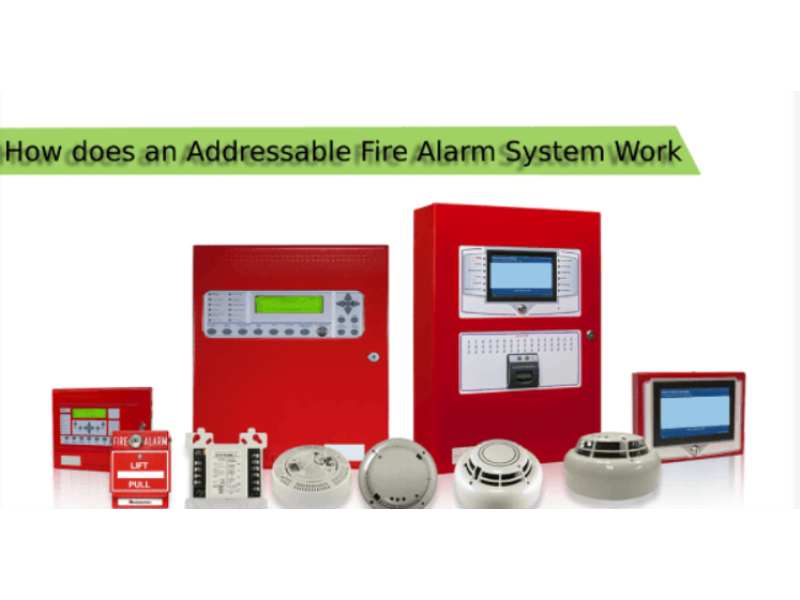
THRESHOLD FIRE ALARM SYSTEMS
Threshold fire alarm systems rely on preset limits for fire detection. When a detector registers values exceeding these limits-such as smoke density, temperature, or flame intensity-it triggers an alarm.
WORKING PRINCIPLES
In threshold systems, detectors operate autonomously, switching from a "normal" state to a "fire" state when a parameter exceeds its threshold:
- Smoke Detectors: Triggered by increased optical density in the air.
- Heat Detectors: Activate at specific temperature levels.
- Flame Detectors: Respond to infrared or ultraviolet radiation.
The control panel (also called a fire alarm panel) processes these signals, generating notifications and activating fire safety mechanisms.
Single vs. Two-Threshold Systems
- Single Threshold: Alarms trigger with a single detector activation.
- Two-Threshold: Requires multiple detectors to activate before raising a fire alert. This reduces false alarms and enhances reliability.
TYPES OF CONNECTIONS
Increasing Current Systems
- Detectors reduce resistance when triggered, increasing loop current.
- The control panel monitors these changes to identify alarm states.
Decreasing Current Systems
- Detectors break the circuit when triggered, reducing current flow.
- Less common but offers alternative design possibilities.
THRESHOLD FIRE DETECTORS
Advantages
- Cost-Effective: Affordable hardware and installation.
- Ease of Use: Simple configuration and maintenance.
Limitations
- Static Detection: Cannot monitor real-time parameter changes.
- Limited Functionality: Lacks advanced features like dynamic fire analysis.
ADDRESSABLE VS. THRESHOLD SYSTEMS
Threshold Systems
- Basic, binary operation: "normal" or "fire."
- Suitable for small-scale setups with minimal fire risks.
Addressable Systems
- Provide detailed data on detector location and performance.
- Enable dynamic fire analysis, enhancing response accuracy.
WHEN TO CHOOSE A THRESHOLD SYSTEM
Threshold fire alarm systems are ideal for:
- Small Businesses or Homes: Where cost efficiency is crucial.
- Low-Risk Environments: Minimal fire hazards reduce the need for advanced features.
For more complex setups, consider addressable systems for enhanced functionality.
CONCLUSION
Threshold fire alarm systems remain a reliable, affordable choice for basic fire safety. However, for larger or high-risk environments, advanced solutions like addressable or analog systems offer better performance and accuracy.
For premium fire alarm solutions tailored to your needs, visit safsale.com-your trusted partner in fire safety systems!