If your apartment lacks a dedicated yellow-green grounding wire, don’t panic. While properly grounding outlets significantly enhances safety when using electrical devices, there are effective alternatives to achieve protection—even in systems without a separate ground wire. In many cases, grounding may not be strictly necessary (for example, in lighting circuits).
Many believe that high-power appliances such as washing machines, electric stoves, or water heaters are inherently more dangerous. In reality, these devices usually feature metal enclosures, which pose a shock risk only if a fault occurs. However, even smaller appliances like hairdryers can be hazardous if their insulation fails. In such cases, traditional grounding might not suffice—but a well-installed Residual Current Device (RCD) will detect leakage currents and promptly disconnect power.
Volvamos a la pregunta principal: ¿Cómo aterrizó su apartamento correctamente?
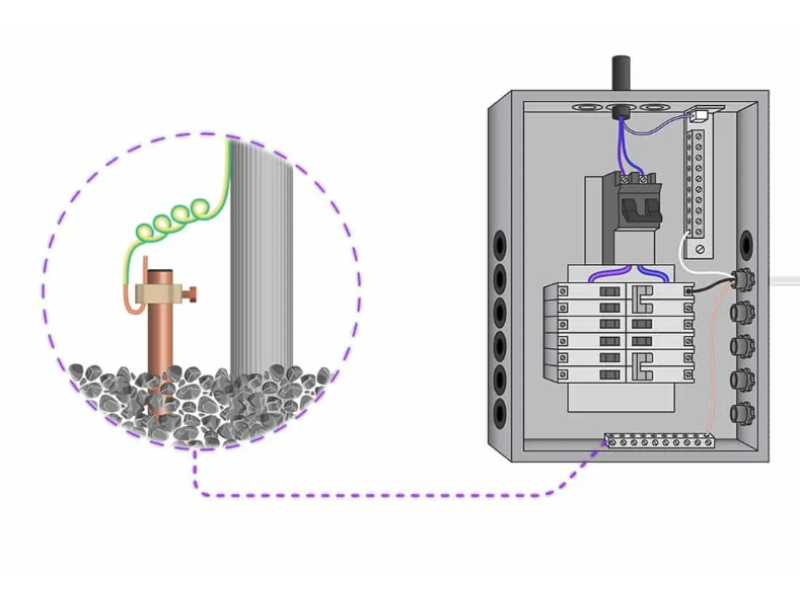
If the main electrical panel (often called the breaker box) in your building is equipped with a grounding bus, you can boost safety by running an additional ground wire and connecting it to the grounding terminal. Most wiring schemes in modern installations use this method, and sometimes, it’s even acceptable to connect to the neutral bus, provided the neutral is properly bonded to ground at the service entrance. (Keep in mind, the neutral must be reliably grounded at the point of entry.)
Si no está seguro sobre el estado puesta a tierra de su panel eléctrico, lo mejor es no intentar una solución de bricolaje - el correcto puesta a tierra debe ser parte del sistema proporcionado por su empresa de servicios públicos. Confíe en profesionales certificados para asegurarse de que su sistema cumple con todos los estándares de seguridad.
Protección RCD cuando puesta a tierra está ausente
For those apartments lacking a dedicated ground wire, installing an RCD (Residual Current Device) is the safest alternative. An RCD monitors the balance of current between the hot and neutral wires. If it detects even a small leakage current (typically around 5–6 mA), it will trip, disconnecting power to protect you from electric shock.
Even without a separate ground conductor, the RCD will provide a measure of safety. For example, if an appliance’s insulation fails and its metal case becomes live, the RCD will sense the leakage current and interrupt the circuit before a dangerous shock occurs.
In some configurations, you might choose not to install an extra ground wire (sometimes called the AB wire). The RCD will still operate if you come into contact with an energized appliance, as its role is to detect and interrupt fault currents. However, until a fault occurs, the RCD does not “see” the phase on the appliance’s metal case. Nonetheless, the safety objective is met, and the risk is minimized.
En safsale.com, enfatizamos el uso de componentes eléctricos de alta calidad y seguir las mejores prácticas de la industria para garantizar que su cableado sea seguro y confiable. Ya sea actualizando un sistema más antiguo o instalando nuevo cableado, puesta a tierra adecuado (o protección RCD efectiva cuando un terreno separado no está disponible), es crucial para prevenir riesgos eléctricos.
Para suministros puesta a tierra de alta calidad y asesoramiento experto en seguridad eléctrica, visite safsale.com. Asegúrese de que el sistema eléctrico de su apartamento es seguro y cumple con los estándares modernos mediante la elección de productos de confianza y prácticas de instalación profesional.
Productos relacionados de Safsale
Continúe desde la guía de la Academia a los equipos y componentes en vivo disponibles en Safsale.