En safsale.com, sabemos que la comprensión de los fundamentos de tensión eléctrica can profoundly deepen your understanding of how electricity powers modern life, whether you’re in the USA or anywhere else. Voltage is a key concept in electronics and power distribution, explaining why current flows through circuits, what causes energy consumption, and how we distinguish between direct current (DC) and alternating current (AC). Below, we’ll clarify voltage in simple terms and explore its relationship to electrical current and energy.
Voltage Defined: A Practical Explanation
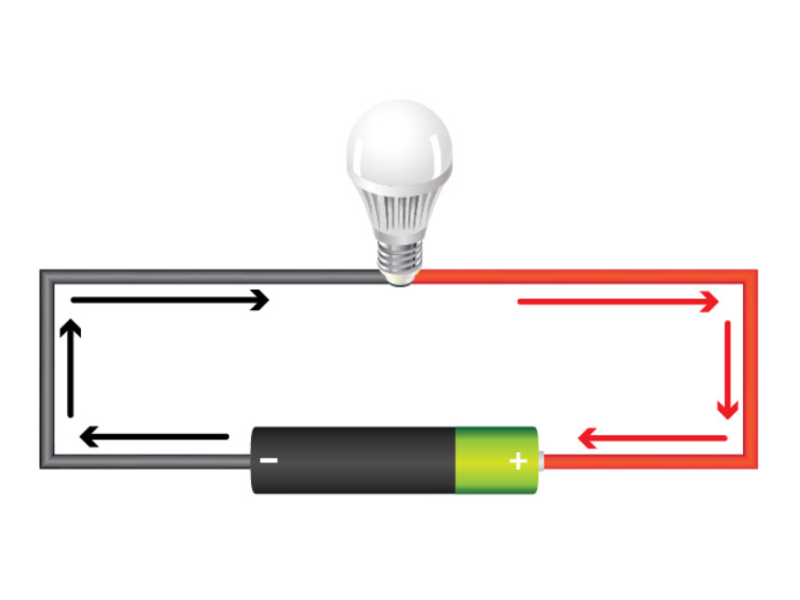
From a physics standpoint, tensión eléctrica (U) between two points, A and B, is defined as the amount of work the electric field performs in moving a unit of electric charge. Put more simply, voltage is the “push” or “pressure” that causes charges (electrons) to flow in a circuit.
Because energy cannot appear from nowhere, some source must supply the work needed to create voltage in any electrical system. These sources include:
- Generadores eléctricos (vapor, agua, energía eólica, etc.)
- Dispositivos de energía química (baterías, pilas de combustible)
- Paneles solares (fotovoltaicos)
In everyday life, we usually connect to this voltage via power outlets, batteries, or other accessible points. The specific mechanism—burning fuel, harnessing water flow, or capturing sunlight—matters less to most users than the fact that a stable voltage is available for their devices. At safsale.com, con frecuencia guiamos a propietarios de viviendas y profesionales en todo los EE.UU. en la selección e instalación de las fuentes de tensión adecuadas para diversas aplicaciones.
Por qué es importante el voltaje
Sin embargo, la corriente moment (I) comienza a viajar a través de un circuito, siempre hay un caída de tensión a lo largo de ese camino, según La ley de Ohm:
- U es la tensión (voltios, V)
- I es la corriente (amperios, A)
- R es la resistencia (ohms, ☆☆☆☆☆)
If the voltage source is strong enough, the electrical current can perform work—powering everything from light bulbs and smartphones to heavy industrial machinery in the USA. Voltage itself is not “used up,” but the Energía eléctrica associated with it is dissipated in the load (like a motor or resistor) as heat, mechanical work, or other forms of energy.
Fuentes de tensión: DC vs. AC
1. Corriente directa (DC)
Tensión de corriente directa (DC) mantiene una dirección consistente del flujo de corriente. Aunque el nivel de voltaje real puede variar con el tiempo (p. ej., el voltaje de una batería cayendo de 12.6 V a 11 V mientras se agota), la polaridad sigue siendo la misma: “positiva” (+) en un terminal y “negativa” (–) en el otro.
Ejemplos de fuentes de DC
- Baterías (disponibles o recargables)
- Paneles solares
- DC fuentes de alimentación o rectificadores que convierten AC a DC
Even if a DC source’s voltage wavers slightly, as long as the current does not reverse direction, we still classify it as DC. Some systems produce pulsado DC (como una salida de rectificador sin filtrar), pero debido a que la corriente sólo fluye de una manera, no se considera corriente alterna.
2. Corriente alterna (AC)
Tensión de corriente alterna (AC) continually changes direction, which is the case in typical household outlets in many parts of the world, including the USA. For instance, the standard supply in American homes is about 120 V AC (fase a neutro), con una frecuencia de 60 Hz—significa que la tensión completa los ciclos completos 60 por segundo.
Parámetros de voltaje de CA clave
- Frecuencia (F): El número de ciclos completos por segundo (Hz).
- Período (T): The time (in seconds) for one full cycle. Frequency and period are inverse:
- Amplitud (U_max): El pico de tensión medido en relación con cero.
- Tensión efectiva (RMS) (U_eff): El valor “raíz media cuadrada” que representa el trabajo que la CA puede hacer con el tiempo, similar a un equivalente DC. Para un sinusoide puro:
AC is favored for utility power in the USA for various reasons, including efficient long-distance transmission via transformers. At safsale.com, ayudamos a los clientes a entender cómo subir o bajar el voltaje de CA para diferentes aplicaciones: comerciales, residenciales o industriales.
Visualización del voltaje: positivo vs. negativo
Cuando hablamos de "positivo" y "negativo", estamos típicamente haciendo referencia a qué terminal o conductor tiene un mayor potencial eléctrico. For DC, current flows from the higher potential (“+”) toward the lower potential (“–”). For AC, the polarity reverses at the rate of the specified frequency—60 times per second in the USA, 50 times in many other countries.
Though direction in AC constantly alternates, devices like light bulbs still produce illumination because the reversal happens so rapidly that the bulb remains effectively lit. In more advanced electronics, AC may be converted into DC for stable operation, using diodes and capacitors in a rectificador.
Perspectivas prácticas: ¿Por qué saber sobre el voltaje?
-
Compatibilidad del dispositivo:
The difference between AC and DC is crucial when connecting equipment. For instance, many consumer electronics in the USA rely on DC inputs, requiring adapters or power supplies to convert from the 120 V AC wall outlet. -
Niveles de tensión:
Different voltages exist—12 V DC in a car battery, 120 V AC in American homes, 240 V AC for larger appliances like electric dryers or air conditioners. Understanding voltage ensures safe and efficient device usage. -
Seguridad:
Saber si un circuito está en un “alto voltaje” o “bajo voltaje” ayuda a evitar choques e incendios. Los EE.UU. se adhieren a estrictas directrices establecidas por organizaciones como la Asociación Nacional de Protección contra Incendios (NFPA) y la Administración de Seguridad y Salud Ocupacional (OSHA), especialmente para entornos industriales y comerciales. -
Diseño del sistema:
Ingenieros y electricistas deben tamaño adecuado cables y componentes basados en la tensión y la demanda de corriente. Las piezas infravaloradas pueden sobrecalentarse o fallar, creando riesgos.
En safsale.com, we emphasize the importance of selecting correct voltage ratings for everything from home appliances to large-scale industrial motors, ensuring compliance with local codes in the USA and delivering maximum efficiency.
Resumen
In essence, tensión eléctrica es la fuerza motriz que impulsa la corriente a través de un circuito, derivada de fuentes que transforman un tipo de energía (mecánica, química, solar) en energía eléctrica. La tensión puede clasificarse en:
- Corriente directa (DC): Steady polarity, commonly found in batteries or solar panel outputs.
- Corriente alterna (AC): Reverses polarity and amplitude cyclically—like the 60 Hz power grid in the USA.
Recognizing how voltage works and why it changes direction or maintains polarity clarifies many basic electrical concepts, from how a simple LED circuit is powered to how entire neighborhoods in the USA receive electricity from massive AC generators.
Para obtener explicaciones más detalladas, ayuda con las transformaciones de voltaje, o consejos para aprovechar la electricidad de forma segura, Contacta con nosotros en safsale.com. Our mission is to deliver straightforward guidance on energy and power solutions, tailored for the American market and grounded in reliability and safety ⚡.
Productos relacionados de Safsale
Continúe desde la guía de la Academia a los equipos y componentes en vivo disponibles en Safsale.