
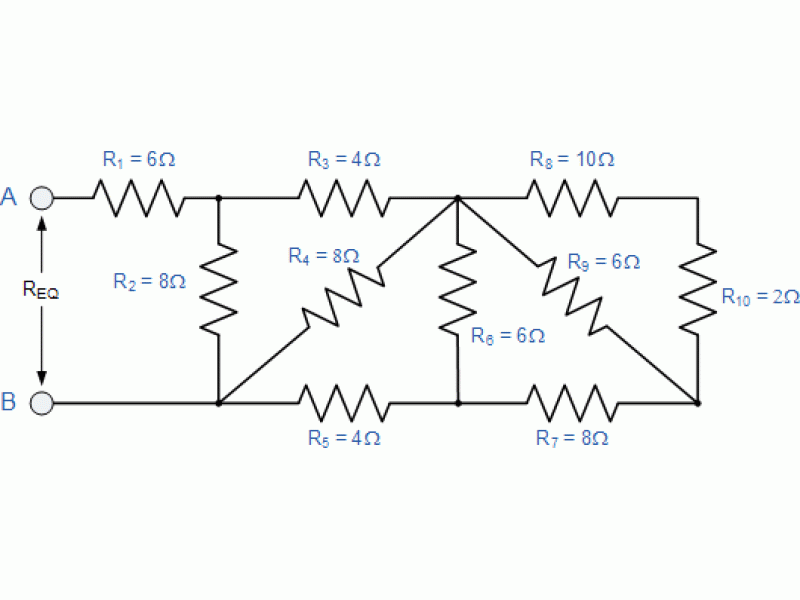
Understanding Resistor Connections: Series, Parallel, and Mixed Circuits
1. Introduction: Why Resistor Connections Matter
Resistors can be connected in different ways in circuits to control voltage, current, and power distribution. The three main types of resistor connections are:
✔ Series Connection – Resistors are connected end-to-end
✔ Parallel Connection – Resistors are connected across the same two points
✔ Mixed Connection – Combination of series and parallel
Why It Matters: Understanding resistor connections is crucial for designing voltage dividers, current limiters, and power regulation circuits.
2. Series Resistor Connection
Definition: Resistors in a series circuit are connected end-to-end, meaning current flows through each resistor sequentially.
Key Properties of Series Connection
✔ Same Current Across All Resistors:
✔ Total Resistance is the Sum of Individual Resistances:
✔ Voltage Divides Proportionally Across Resistors:
✔ Voltage Ratio Matches Resistance Ratio:
Example Calculation
Three resistors (10Ω, 20Ω, and 30Ω) are connected in series with a 24V power supply.
✔ Total Resistance:
✔ Current Flowing Through Circuit:
Using Ohm’s Law ():
✔ Voltage Drops Across Each Resistor:
Related products from Safsale
Continue from Academy guidance to live equipment and components available on Safsale.


