
📶 Boost Your Internet Signal with Repeaters for Cabins & Rural Homes
Poor mobile and WiFi connectivity is a common problem, especially in rural areas, cabins, or remote properties. Even in urban settings, obstacles and interference can degrade the signal quality of your wireless networks. Whether you’re struggling with weak 3G/4G mobile internet on your cabin or experiencing WiFi drop-offs in your home, a signal repeater (or amplifier) might be the ideal solution to boost connectivity.
At safsale.com, we offer professional-grade internet signal repeaters designed to work with GSM and WiFi systems. These devices help ensure reliable, fast internet access, even in challenging environments. Let’s explore how repeaters work, key factors influencing signal quality, and practical installation tips.
🔍 Why Signal Repeaters Are Essential
Common Challenges:
- Distance & Obstructions:
Cellular and WiFi signals weaken with distance. Buildings, trees, and terrain (like hills or dense forests) can drastically reduce the signal strength. For instance, a rural cabin might experience weak 3G or 4G signals due to its distance from the nearest cell tower. - Interference:
Everyday devices such as microwaves (which operate at 2.4 GHz for WiFi), cordless phones, and even neighboring routers can cause signal interference, further degrading performance. - Network Overload:
In densely populated areas, the high number of connected users can reduce the effective speed available for each device.
How Repeaters Help:
- Signal Amplification:
A repeater receives a weak signal from your router or cellular network, amplifies it, and rebroadcasts the enhanced signal to your devices. - Extended Coverage:
By using repeaters, you can extend the coverage of your wireless network-whether for WiFi indoors or GSM signals outdoors. - Consistent Connectivity:
With improved signal strength, your internet speeds become more reliable, reducing buffering and connectivity issues.
⚙️ Organizational Methods to Boost Signal Quality
Before purchasing additional hardware, consider these organizational tips:
- Optimal Placement:
Position your router or repeater in a central, elevated location. For a cabin, this might be near a window or mounted on a pole. In a home, place it in a central hallway to maximize indoor coverage. - Minimize Obstacles:
Ensure there are as few physical obstructions (walls, metal structures, thick trees) as possible between your repeater and the signal source. For WiFi, even a standard brick wall can reduce signal range by about 25%. - Select the Right Channel:
WiFi routers operate on multiple channels. Use a free utility (like inSSIDer) to scan for less congested channels and adjust your router settings accordingly. - Regular Firmware Updates:
Keep your router and repeater firmware up to date. Manufacturers frequently release updates that improve performance and fix bugs.
🔧 Hardware Solutions: GSM & WiFi Signal Boosters
GSM Signal Amplifiers (Repeaters)
- Purpose:
GSM repeaters are designed to amplify cellular signals for improved mobile internet and phone connectivity, particularly in rural areas. - How They Work:
A typical GSM repeater has:- External Antenna:
Often directional (e.g., Yagi or panel type) to capture the best available signal from a distant cell tower. - Amplifier:
Boosts the captured signal. - Internal Antenna:
Rebroadcasts the enhanced signal indoors.
- External Antenna:
- Installation Tips:
- Mount the external antenna as high as possible (e.g., on a mast or rooftop) and aim it toward the nearest cell tower.
- Use high-quality coaxial cables with a 50-ohm impedance to minimize signal loss.
- Product Example:
The Picocell 900 SXA offers a robust GSM signal boost with an output power of 100 mW and a gain of approximately 70 dB, ideal for rural settings with weak signals.
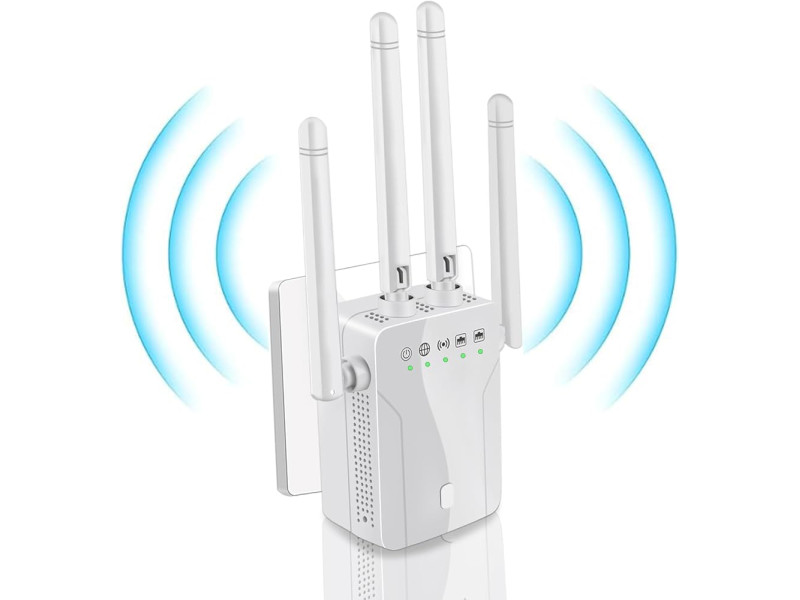
WiFi Repeaters
- Purpose:
WiFi repeaters extend the coverage of your wireless network within a building or property. - How They Work:
They receive the WiFi signal from your router and retransmit it, effectively broadening your network’s range. - Installation Tips:
- Place the repeater midway between the router and the area with poor signal.
- Avoid obstructions and interference sources to maximize performance.
- Key Consideration:
Note that adding more devices to your network reduces the available bandwidth per device, so choose a repeater that supports high data rates, such as those compliant with the 802.11ac standard.
Hybrid Solutions: Mobile WiFi Routers with 3G/4G Modems
- For Remote Locations:
If you’re in an area without reliable wired internet, consider a mobile WiFi router with an integrated 3G/4G modem. These devices provide WiFi connectivity using cellular data. - Performance:
- 3G: Up to 3.6 Mbps
- 4G: Up to 100 Mbps
- Usage:
Ideal for rural properties, cabins, or vehicles. They often resemble USB flash drives and can be powered by a charger rated for at least 1.5 amps.
📶 Key Factors Influencing Signal Quality
- Distance:
Signal strength decreases as the distance between the source and the repeater increases. - Obstacles:
Physical obstructions such as walls, trees, and terrain can attenuate both WiFi and GSM signals. - Interference:
Electromagnetic interference from devices like microwaves, cordless phones, and nearby routers can impact performance. - Network Load:
More connected devices result in lower bandwidth for each device.
🎯 Conclusion
Enhancing your WiFi and GSM signal is essential for ensuring reliable internet connectivity, especially in rural or remote areas like cabins and country homes. Whether you’re boosting your mobile internet with a GSM repeater or extending WiFi coverage with a wireless repeater, proper planning and installation are key.
At safsale.com, we offer a range of professional signal boosters that meet American standards, ensuring that you get robust connectivity regardless of your location. Upgrade your network today and enjoy fast, reliable internet-whether at home, in a cabin, or on the go 🚀📶🔧
Explore our solutions now and experience the difference in wireless performance!