
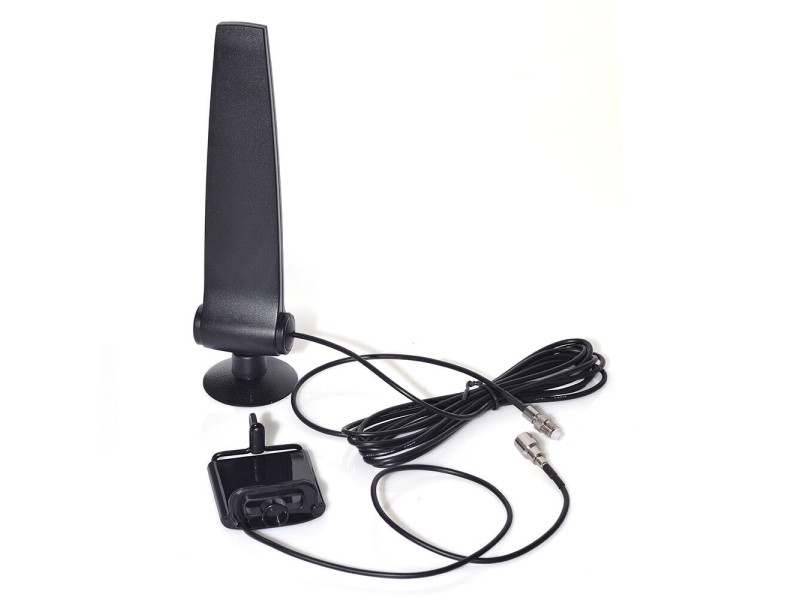
GSM Signal Antennas for Enhanced Mobile Connectivity
In urban areas, radio noise and physical obstructions often degrade mobile signals. Rural homes, cabins, and small communities—often underserved by carriers—face similar challenges. Fortunately, by installing an external GSM antenna on your property, you can significantly boost mobile internet reception, ensuring fast, reliable connectivity even in remote locations.
At safsale.com, we offer high-quality GSM antennas designed to meet American standards. Our solutions are engineered to work with GSM/2G, 3G, and 4G (LTE) networks, so you can enjoy better signal strength, faster data speeds, and enhanced overall performance.
Overview of GSM Antenna Designs
GSM antennas are transceiver devices that amplify and enhance the basic cellular signal. Their design and performance depend on various factors such as signal strength at your location, terrain, and technical specifications. Here are the main types:
1. Yagi (“Wave Channel”) Antennas
- Design & Construction:
A Yagi antenna consists of a crossbar on which are mounted several elements:- A reflector
- One active element (the driven element)
- One or more directors arranged toward the GSM tower
- Key Feature:
The gain increases with the number of directors but comes with a narrow beamwidth (sometimes as narrow as 15°–20°), requiring precise alignment. - Benefits:
High gain in a compact design, ideal for boosting weak signals.
2. Panel (Flat) Antennas
- Design:
These antennas are flat and compact, with the radiating element placed inside a reflector. - Key Feature:
They offer a wider beamwidth (typically 40°–60°) which makes them less sensitive to alignment errors. - Benefits:
Easy installation and robust performance even when precise aiming is challenging; however, their larger surface area may be less wind-resistant.
3. Rod (Monopole or “Stick”) Antennas
- Design:
A simple design, essentially a “stick” mounted vertically. - Key Feature:
Provides omnidirectional coverage in the horizontal plane (360°) with a moderate gain. - Benefits:
Ideal as a “booster” for indoor use or in areas with severe signal attenuation (e.g., due to concrete or metal structures).
How to Choose the Right GSM Antenna
Key Selection Criteria:
Working Frequency Range:
Mobile operators in the USA typically use:- 2G: 900 MHz and 1800 MHz
- 3G: 900 MHz and 2100 MHz
- 4G (LTE): 800 MHz, 1800 MHz, and 2600 MHz
A narrowband antenna cannot effectively receive both 800 MHz and 2100 MHz simultaneously.
Tip: Use a signal monitoring app (e.g., “GSM Signal Monitoring” on your smartphone) to measure the signal strength in dBm (decibels relative to 1 mW). In this scale, lower dBm values indicate stronger signals. For instance, a reading of –50 dBm represents a very strong signal, while –113 dBm is extremely weak.
Location & Signal Level:
Determine where the mobile signal is strongest on your property. Signal indicators on your phone (bars or “palki”) provide a rough idea, but professional apps can offer a more precise measurement. For example, you may discover that reception on the second floor near a window is much better than on the first floor.
Conversion Note: If measurements are given in meters, remember 1 meter ≈ 3.28 feet.Environmental Considerations:
Consider physical obstacles such as nearby buildings, trees, and terrain. In densely built urban settings, reflections and interference may occur. For rural properties, the antenna might need to be mounted on a mast for a clear line of sight to the nearest cell tower.Materials and Build Quality:
Look for antennas made of durable materials like aluminum or galvanized steel to prevent corrosion. Avoid plastic mounting components as they may not withstand harsh outdoor conditions.
Installation and Connection
Mounting the Antenna:
- Optimal Placement:
Mount the antenna as high as possible—for instance, on a rooftop or tall mast—to minimize obstructions. - Secure Fixing:
Use sturdy brackets, clamps, or mounting hardware designed for outdoor use. Ensure that the antenna is fixed securely to avoid movement caused by wind. - Adjustability:
For directional antennas (like Yagi or panel types), the mounting setup should allow for easy adjustment so you can fine-tune its orientation toward the nearest cell tower.
Connecting the Antenna:
- Feeders & Connectors:
Use a high-frequency coaxial cable (e.g., RG-6 or equivalent) with a characteristic impedance of 50 ohms. Though some systems use 75-ohm cables (common in TV setups), a 50-ohm cable is standard for GSM antennas. - Minimize Signal Loss:
Keep cable runs as short as possible to reduce attenuation. Every connector (such as pig-tail adapters) introduces additional loss. - Device Integration:
The antenna connects to a GSM modem, repeater, or router. Ensure that all connectors (RF connectors) match in impedance to guarantee minimal signal degradation.
Enhancing Mobile Internet with GSM Antennas
By selecting and installing the right GSM antenna, you can significantly boost your mobile internet performance, especially in areas where the signal is weak. Whether you choose a high-gain Yagi, a user-friendly panel antenna, or a simple rod antenna, careful alignment and proper installation are key.
At safsale.com, we offer a variety of GSM antennas engineered to meet American standards, ensuring reliable connectivity for homes, cabins, and rural properties. With our expert solutions, you can overcome signal challenges and enjoy high-speed mobile internet even in the most remote areas.
Upgrade your connectivity today—explore our GSM antenna range and experience enhanced mobile performance no matter where you are ???
Related products from Safsale
Continue from Academy guidance to live equipment and components available on Safsale.


