
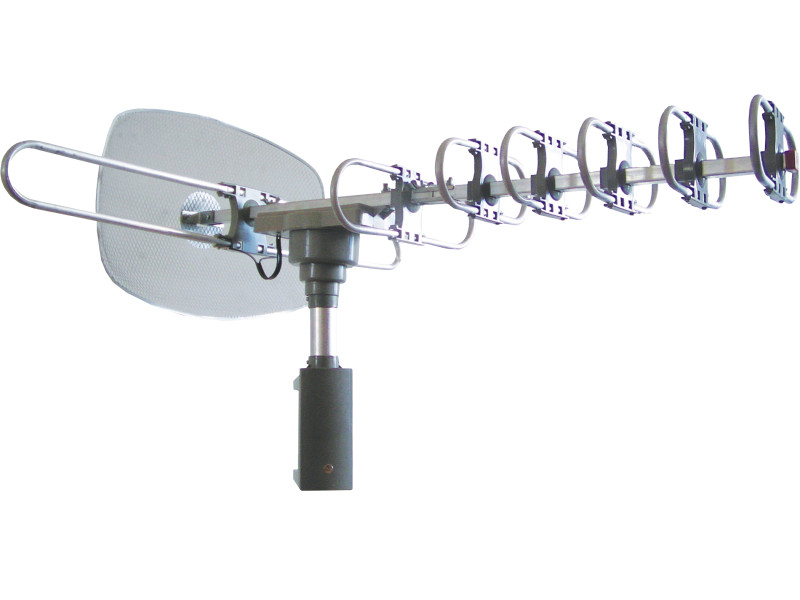
📡 Digital TV Antennas: Choosing and Installing for Superior Reception
Digital terrestrial television in the United States is broadcast by transmitters mounted on towers and received in homes and offices using a digital TV tuner. Unlike analog systems, digital signals maintain consistent image quality even with moderate signal loss. Moreover, digital transmission can carry significantly more data—allowing for both standard and high-definition broadcasts. Whether your TV tuner is built into your television or added as a set-top box, receiving a clear digital signal starts with the right antenna.
🔍 Understanding Digital TV Reception
Digital TV signals are transmitted in specific frequency bands. In the U.S., most digital broadcasts use the UHF spectrum—typically between 470 MHz and 698 MHz—which is crucial for receiving DVB-T2 or ATSC 3.0 signals. The antenna you choose must be designed to operate within this frequency range. While many products may also reference terms like “DVB-T2,” “SDTV,” or “HDTV,” the key specification to look for is UHF.
For multi-unit residences, a common (shared) antenna may suffice. However, in a private home or cabin, you’ll need to install your own digital TV antenna to ensure uninterrupted access to over-the-air broadcasts.
📡 Types of Digital TV Antennas
There are several popular designs for receiving digital TV signals, each with unique advantages:
1. Dipole Antennas ("Rabbit Ears")
- Design:
Consists of two conductive elements, typically extendable, each roughly a quarter of the wavelength long. - Features:
These simple antennas are usually omnidirectional in the horizontal plane, making them ideal for indoor setups. - Usage:
Commonly used in rooms where the signal source is nearby and obstacles are minimal.
2. Yagi (Wave Channel) Antennas
- Design:
A Yagi antenna features one active element (the driven element) accompanied by passive elements—directors and a reflector—to boost gain. - Performance:
Typically offers gains of 6–12 dB and a narrow beamwidth (around 15–20° if additional directors are used). Higher gain models can reach up to 20 dB, but require precise alignment. - Usage:
Ideal for outdoor installations where a directional focus is needed, especially if the TV transmitter is far away.
3. Log-Periodic Antennas
- Design:
Comprised of multiple dipole elements arranged in order of decreasing size, providing a wide frequency bandwidth. - Performance:
Offers moderate gain (around 6–7 dB) with a wider beamwidth (approximately 60°), making them versatile for capturing signals across a broad range. - Usage:
Suitable for areas where the signal might vary over a range of frequencies or when you need a balance between gain and coverage.
4. Combined (All-Wave) Antennas
- Design:
These antennas combine elements for both VHF and UHF reception. - Usage:
Useful if your location also receives analog signals or if you want flexibility to cover a broader range of channels.
🔧 Installation and Connection Tips
Antenna Placement
- Optimal Location:
For the best signal reception, place your antenna where it has a clear view of the TV transmitter. This could be near a window on the second story or mounted on the roof. In rural areas or where buildings and trees obstruct the signal, a higher mast may be required. - Alignment:
Directional antennas like Yagi and log-periodic types must be accurately pointed toward the transmitter. Use online tools or smartphone apps to determine the direction of the nearest broadcast tower.
Connecting the Antenna
- Cable Selection:
Connect your antenna to your TV or set-top box using a high-quality coaxial cable. In the U.S., these cables typically have a characteristic impedance of 75 ohms. - Minimize Losses:
Keep the cable run as short as possible to reduce signal loss, and avoid unnecessary connectors and splices. If you must extend the cable, use proper adapters (such as pig-tail connectors) that match the 75-ohm standard.
Additional Considerations
- Weather and Obstructions:
For outdoor antennas, ensure they are securely mounted and weatherproof. Consider materials that can withstand rain, wind, and temperature fluctuations. - Aesthetic Integration:
In residential settings, discrete antennas that blend with the home’s exterior can be a plus without sacrificing performance.
🎯 Conclusion
Digital TV antennas are essential for enjoying high-quality over-the-air television in American homes and rural settings. By selecting an antenna that is specifically designed for the UHF band and by understanding the different types—dipole, Yagi, log-periodic, and combined—you can maximize your reception quality. Proper installation, careful alignment, and quality connection cables will ensure you receive a robust signal and enjoy uninterrupted viewing.
At safsale.com, we offer a variety of digital TV antennas engineered to meet American standards. Whether you’re upgrading your home entertainment system or setting up a cabin for remote living, our solutions provide the performance and reliability you need. Upgrade your reception today and experience the difference! 🚀📺🔧