
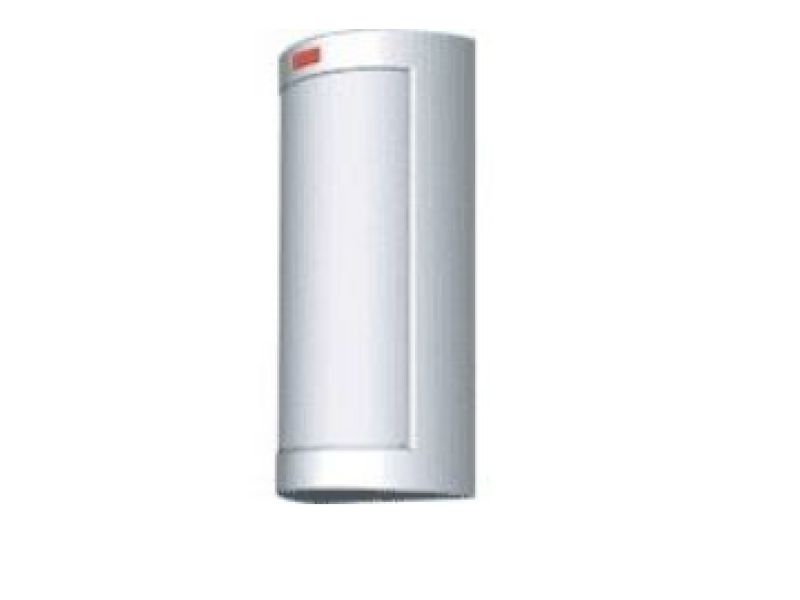
Surface (plane) security sensors are specialized devices used exclusively in security alarm systems. Unlike volumetric sensors (motion detectors) or linear beam sensors (perimeter IR beams), these detectors focus on monitoring a specific plane-like a wall, window, or door-to detect attempts at forced entry. They’re often employed in the first line of defense (the perimeter) to catch intruders early, either before or immediately upon breaching a barrier. Below, we’ll examine three main categories:
- Acoustic (Sound-Based) Detectors
- Vibration (Shock) Detectors
- Infrared (Optical-Electronic) “Curtain” Detectors
1. Acoustic (Glass-Break) Detectors
Primary Use
- Glass surfaces (e.g., windows, storefronts) where an intruder might smash through.
- Also suitable for decorative glass doors and partition walls.
How They Work
- Microphone captures the distinctive sound of breaking glass-a low-frequency impact plus high-frequency “shatter.”
- Signal Processing discerns these frequencies to reduce false alarms from normal ambient noises.
Key Considerations
- Maximum Distance & Angle
- Typically up to 20 feet (6 meters) range, with a wide coverage angle (~120°).
- Glass Type & Thickness
- Different glass (tempered, laminated, double-pane) produces different acoustic signatures.
- Check that your chosen sensor supports the specific glass type and thickness.
- Minimum Controllable Surface
- Some sensors have a lower limit on the window area they can reliably detect.
- Very small glass panes, or glass coated with films, may dampen the shattering noise enough to evade detection.
- Installation
- Often ceiling- or wall-mounted.
- Curtains, blinds, or thick drapes can muffle the sound-placing the sensor on the window frame or recess might help.
- Limitations
- No detection for quietly removing glass from the frame (no break).
- May need a secondary sensor (e.g., IR curtain) if intruders can remove glass in one piece.
2. Vibration (Shock) Detectors
Primary Use
- Walls, floors, ceilings, or metal grates vulnerable to physical breach by hammering, drilling, sawing, etc.
- Also used on windows (e.g., older “shock-contact” models) and steel doors.
How They Work
- Piezo or similar vibration sensor monitors surface resonance from impact or drilling.
- The sensor’s zone of coverage is typically circular with a certain radius-some portion of the wall or window is protected.
Key Considerations
- Early Detection
- Vibration sensors can alert security before the barrier is fully penetrated.
- Useful for high-value areas (vaults, safes).
- Potential False Alarms
- Vibrations from passing trucks, construction, or high winds can trigger nuisance alerts.
- Heavier, more rigid surfaces (concrete vs. thin wood) often reduce false positives.
- Coverage & “Blind Spots”
- Since each sensor covers a circular zone, rectangular surfaces may require multiple detectors for full coverage.
- Installing many sensors raises cost and complexity.
- Mounting
- Usually attached directly to the target surface.
- The sensor’s signal processor or transmitter may be in the same housing or separate.
3. Infrared (Optical-Electronic) “Curtain” Detectors
Primary Use
- Indoor (and some outdoor-rated) sensors creating a narrow IR plane-often referred to as a “curtain.”
- Applied to windows, doorways, or along walls where crossing that plane triggers an alarm.
How They Work
- Passive IR technology (or combined IR/MW in some advanced versions) forms a thin detection zone near the protected surface.
- When an intruder crosses the IR field, the detector signals an alarm.
Key Considerations
- Trigger Timing
- Detection occurs once the intruder has entered the room or crossed the IR barrier.
- Not as early as vibration or acoustic (which can trigger on impact).
- Mounting
- Typically near the edge of the surface being protected (e.g., window recess, door frame).
- Must avoid direct sunlight, intense drafts, and large temperature fluctuations to prevent false alarms.
- Range
- Limited to moderate distances, not suited for very large perimeters.
- Supplementary Use
- Often a secondary sensor in conjunction with vibration or acoustic units for comprehensive coverage.
Wired vs. Wireless & Installation
All three sensor types (acoustic, vibration, IR) can come in wired or wireless (radio-channel) versions:
- Wired
- Typically lower cost, more reliable (no battery needed).
- Requires running cables, which can be difficult in finished spaces.
- Wireless
- Quick to install, simpler for retrofits.
- More expensive and dependent on radio range and periodic battery replacement.
Mounting Recommendations
- Acoustic: Ceilings/walls within range of the glass; avoid thick curtains or blinds.
- Vibration: Attach securely to the surface being protected (wall, door, window). Minimizing external noise reduces false alarms.
- IR Curtain: Position so the “sheet” of IR coverage lines up precisely with the plane-avoid obstacles, and ensure stable mounting free from direct sunlight or strong drafts.
Combining Approaches
- Early Stage Detection: Vibration sensors can alert before the intruder fully breaks in.
- Definitive Confirmation: Acoustic picks up the definitive sound of glass breaking.
- Final Barrier: IR curtain triggers once an intruder crosses into the protected area.
Conclusion
Surface detection sensors (acoustic, vibration, and IR curtain) provide a specialized layer of intrusion protection for windows, walls, and doors. They’re particularly well-suited to “first-line” security-detecting or deterring attacks even before an intruder fully gains access. However, each sensor type has unique installation considerations and potential limitations:
- Acoustic: Excellent for glass-break detection, but vulnerable to dampened sounds (e.g., window film).
- Vibration: Early detection of forced entry, but sensitive to environmental vibrations.
- IR Curtain: Triggers on crossing the IR plane; less effective as a purely outer perimeter device yet great for indoor “barrier” coverage.
Successful deployment may involve combining two or more sensor types-or using integrated “hybrid” devices for maximum coverage and minimal false alarms. For help tailoring a surface security sensor solution to your property, visit safsale.com. Our experts can guide you in selecting, installing, and calibrating the right devices for robust and reliable intrusion protection.