
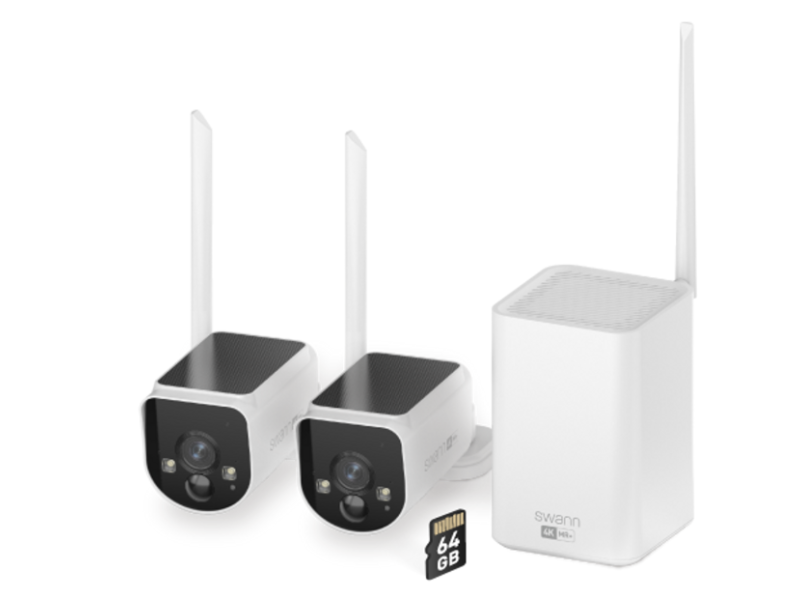
📡 Wireless Technologies in Security Systems
Wireless data transmission is now integral to nearly every security system-spanning fire and intrusion alarms, video surveillance, access control, and telemetry. In today’s fast-paced American market, seamless connectivity is essential for ensuring robust protection. At safsale.com, our cutting-edge wireless solutions leverage various technologies to meet diverse security needs. This guide explains the key wireless standards, their strengths and limitations, and offers recommendations for practical application in modern U.S. security systems.
📶 Popular Wireless Technologies in Security
1. Radio Frequency (RF) Systems
- Overview:
RF systems operate within tightly regulated frequency bands, ensuring that their transmitters remain within legal power limits. Typically used for smaller-scale wireless alarm systems, these devices offer a coverage range of approximately 328 to 1,640 feet (100-500 meters) under direct line-of-sight. - Application:
Ideal for localized security installations, RF systems are commonly found in wireless intrusion alarms and intercoms. - Note:
Use RF systems for short-range communication within a single property. Their limited range makes them best for individual buildings or sites.
2. GSM Equipment
- Overview:
GSM technology is widely utilized not only for cellular communication but also for transmitting security data. GSM-based security devices function independently of fixed telephone lines and rely on the extensive coverage provided by mobile network operators. - Advantages:
- Broad Coverage: Operates anywhere within a carrier’s service area.
- Flexibility: Compatible with a wide range of devices-from mobile phones to automated security control centers.
- Applications:
GSM is popular in remote security systems, such as those in rural areas or on properties with limited wired infrastructure.
3. GPS Devices
- Overview:
GPS technology is primarily used for navigation but also plays a crucial role in security. GPS trackers enable real-time location monitoring and are widely used in vehicle fleet management and anti-theft systems. - Applications:
Monitor the movement of service vehicles, track stolen cars, or integrate with broader security systems to enhance situational awareness.
4. WiFi Networks
- Overview:
WiFi is the backbone of local area wireless communication and is extensively used in IP-based security systems. Modern WiFi systems in the U.S. typically operate on 2.4 GHz (and increasingly 5 GHz) bands. - Advantages:
- High-Speed Data Transfer: Suitable for real-time video streaming and remote monitoring.
- Ubiquity: Almost every American home and office is equipped with WiFi.
- Applications:
Essential for wireless IP video surveillance systems and access control solutions, including IP video intercoms.
5. Mobile Internet Technologies (GPRS, 3G, 4G)
- Overview:
Mobile internet is delivered through cellular networks, with each generation offering progressively higher data speeds:- GPRS (2G): Up to about 171 Kbps
- 3G: Speeds up to 42 Mbps
- 4G (LTE): Capable of up to 1 Gbps
- Advantages:
- Ubiquity and Scalability: Offers broad coverage and is not confined to local networks.
- Remote Access: Enables monitoring from virtually anywhere in the U.S.
- Limitations:
High data throughput requirements (e.g., for live video streaming) may strain even 4G networks in densely populated areas. For smaller installations such as rural homes or cabins, 3G or 4G typically suffice.
🔧 Integration and Practical Considerations
Choosing the Right Technology
Selecting a wireless system depends on your specific needs:
- RF systems are best for short-range, localized setups.
- GSM is ideal for remote locations where traditional landlines are unavailable.
- GPS devices ensure precise tracking of mobile assets.
- WiFi networks support high-bandwidth applications like IP video surveillance.
- Mobile internet (GPRS/3G/4G) provides flexibility for remote monitoring and control.
Implementation Tips
- Site Assessment:
Before installation, evaluate the environment-consider obstacles like buildings, trees, and other sources of interference. This assessment helps determine the most appropriate technology and antenna placement. - Professional Installation:
For optimal performance, ensure all wireless devices and antennas are installed according to American standards (e.g., proper mounting, cable selection, and secure connections). At safsale.com, our expert team provides installation guidance tailored to your property. - Maintenance and Upgrades:
Regular system checks and firmware updates help maintain performance and reliability. Consider periodic reassessments of your wireless network to ensure continued optimal operation.
🎯 Conclusion
Wireless technologies have transformed security systems by offering flexible, scalable, and cost-effective solutions across various applications-from alarm systems and video surveillance to access control and fleet tracking. By understanding the strengths and limitations of RF, GSM, GPS, WiFi, and mobile internet, you can design a robust security network that meets the demands of modern American living.
At safsale.com, we deliver state-of-the-art wireless security equipment that adheres to U.S. standards, ensuring seamless integration and reliable performance. Upgrade your security system today and experience the future of wireless protection 🚀📶🔒
Explore our extensive range of wireless solutions and take the first step toward enhanced security!