Beginner’s Guide to Electronics: Understanding Current, Voltage & Resistance
1️⃣ What is Electronics?
Electronics is the science of controlling electrical energy through various components to perform useful tasks, such as lighting up LEDs, powering motors, or processing signals in computers.
This guide will introduce the fundamental concepts of electronics in a simple and practical way.
To begin working with circuits, you need to understand three key electrical properties:
✔ Current (I) – The flow of electric charge
✔ Voltage (U or V) – The force that pushes the charge through a circuit
✔ Resistance (R) – The opposition to current flow
These three parameters define how electrical components interact in a circuit.
2️⃣ What is Electric Current?
Electric current (I) is the movement of charged particles (electrons) through a conductor (wire).
Definition:
Current is the rate at which electric charge flows through a conductor.
✔ Measured in Amperes (A)
✔ Symbolized as I
✔ Can be direct current (DC) or alternating current (AC)
Example of Current Flow:
If you connect a battery to a light bulb, the battery provides energy to push electrons through the circuit, making the bulb glow.
Current only flows in a closed circuit! If the circuit is broken, no electricity moves.
3️⃣ What is Voltage?
Voltage (U or V) is the electric potential difference between two points in a circuit. It’s like pressure that pushes electrons through a conductor.
Definition:
Voltage is the force that drives electrical current through a circuit.
✔ Measured in Volts (V)
✔ Symbolized as U or V
✔ Provided by batteries, generators, solar panels
Example:
A 9V battery has a potential difference of 9 volts between its terminals. If you connect a circuit, current will flow due to this voltage.
4️⃣ What is Resistance?
Resistance (R) is the opposition to the flow of electric current in a material. It determines how much current flows for a given voltage.
Definition:
Resistance is the property of a material that reduces current flow.
✔ Measured in Ohms (Ω)
✔ Symbolized as R
✔ Depends on material, length, thickness, and temperature
Example:
A thin wire has higher resistance than a thick wire, making it harder for current to flow.
✔ Metals like copper = low resistance (good conductors)
✔ Rubber or plastic = high resistance (good insulators)
Practical Impact of Resistance:
✔ High resistance – More heat, energy loss (used in heaters)
✔ Low resistance – Efficient energy transfer (used in power cables)
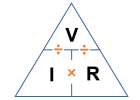
5️⃣ Relationship Between Current, Voltage & Resistance (Ohm’s Law)
Ohm’s Law describes how these three properties interact:
where:
✔ I – Current (A)
✔ U (V) – Voltage (V)
✔ R – Resistance (Ω)
Example Calculation:
A 9V battery is connected to a 1.5kΩ resistor. How much current flows?
✔ The circuit will have a 6mA current flow.
6️⃣ How Electricity is Used in Practical Circuits
Common Electronic Components:
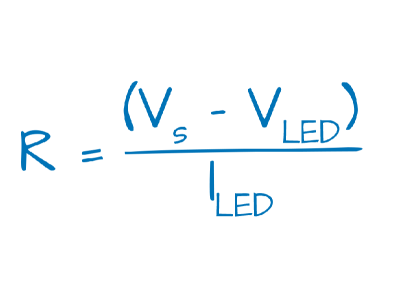
✔ Resistors – Limit current flow
✔ Capacitors – Store electrical charge
✔ Transistors – Act as electronic switches
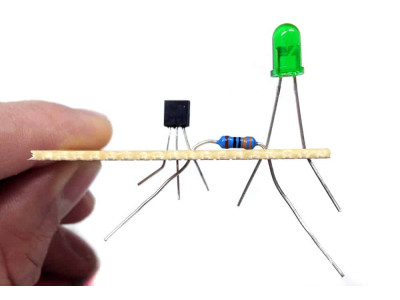
✔ LEDs – Emit light when current flows
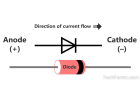
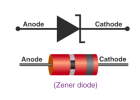
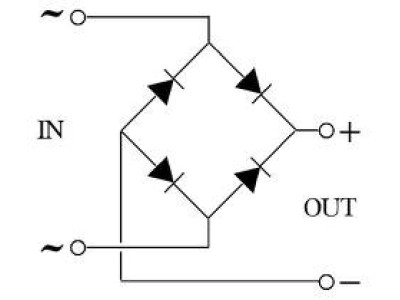
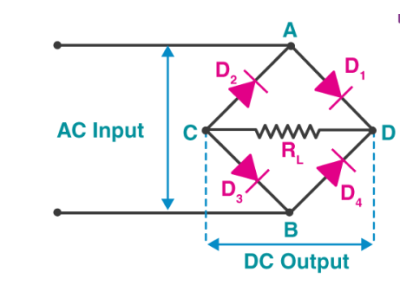
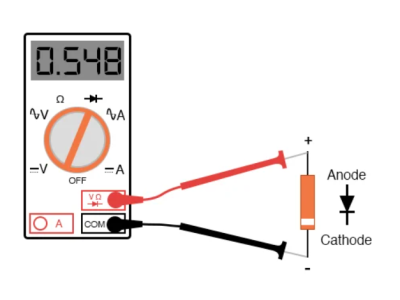
✔ Diodes – Allow current to flow in one direction only
Real-World Applications:
✔ Light bulbs convert electrical energy into light
✔ Electric heaters convert electricity into heat
✔ Motors use electricity to create motion
7️⃣ Units of Measurement in Electronics
Standard Units
| Quantity | Symbol | Unit Name | Common Prefixes |
|---|---|---|---|
| Current | I | Amperes (A) | mA (milliamp) = 0.001A |
| Voltage | U or V | Volts (V) | kV (kilovolt) = 1000V |
| Resistance | R | Ohms (Ω) | kΩ (kilo-ohm) = 1000Ω |
Smaller currents and larger resistances are common in electronics, so milliamperes (mA) and kilo-ohms (kΩ) are often used.
8️⃣ Conclusion: Getting Started with Electronics
✔ Understanding Current, Voltage, and Resistance is essential for working with electronics
✔ Electricity requires a closed circuit to flow
✔ Ohm’s Law helps calculate electrical values
✔ Electronics involve components like resistors, capacitors, and transistors
Next Steps:
✔ Start with simple circuits using batteries and LEDs
✔ Experiment with Ohm’s Law calculations
✔ Learn about basic electronic components and how they work together
Master these basics, and you’ll be on your way to building your own electronic projects!