
Comprehensive Guide to Installing Video Surveillance Systems in a Store
Modern stores require robust video surveillance systems to address multiple security challenges, including theft prevention, employee monitoring, and conflict resolution. A well-designed system ensures peace of mind for store owners while protecting assets and maintaining operational transparency.
Key Objectives of Store Surveillance Systems
Preventing Theft:
- Focus: Install cameras in the sales area to monitor customer activity and detect theft attempts.
- Placement Tips: Position cameras strategically to minimize blind spots and ensure a clear view of high-value or small-sized merchandise.
Monitoring Employee Actions:
- Focus: Place cameras in storerooms, stock areas, and near cash registers to oversee staff behavior and deter potential misuse of resources.
- Detail Level: Use cameras that capture sufficient detail for identifying actions, without excessive resolution for general monitoring.
Resolving Conflicts:
- Focus: Equip entrances, exits, and storage areas with cameras to capture evidence of disputes or altercations.
- Placement Tips: Include coverage of checkout counters to resolve customer-service conflicts effectively.
Choosing the Right Equipment for Store Surveillance
1. Analog vs. IP Systems
Analog Systems:
- Suitable for small shops with limited budgets.
- Easier to install and maintain.
- Offer reliable performance and lower costs.
IP Systems:
- Recommended for large retail chains or stores with expansive floor areas.
- Feature advanced functionalities like facial recognition, motion detection, and remote access.
- Support higher-resolution cameras for detailed monitoring.
2. Camera Placement and Types
Sales Floor Cameras:
- Ensure wide coverage for aisles and shelves.
- Use color cameras to capture detailed images of individuals and products.
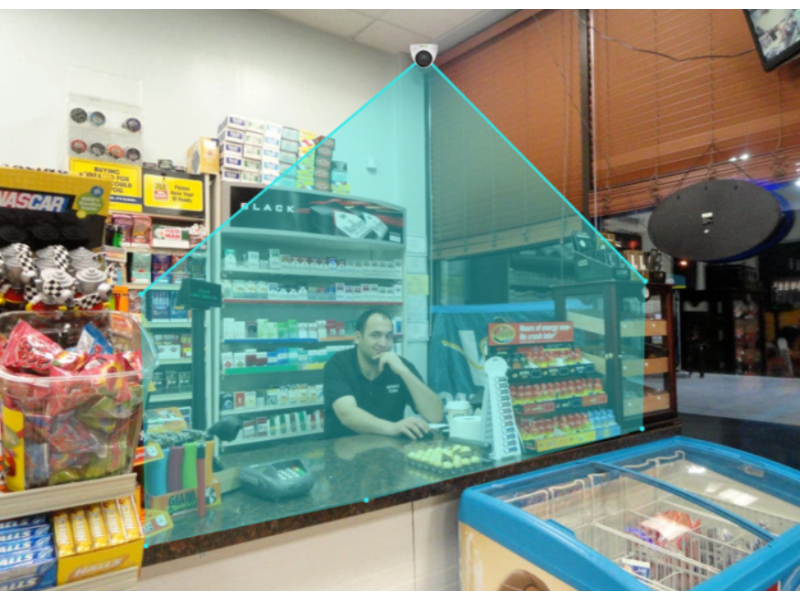
Cash Register Cameras:
- Install at least two cameras per register:
- One for close-up views of cash handling.
- Another for capturing the customer’s face and surroundings.
Storage and Stock Areas:
- Focus on employee monitoring and inventory protection.
- Opt for cameras with wide angles to cover entire storerooms.
Entry/Exit Cameras:
- Monitor traffic at store entrances and exits.
- Capture clear facial images for visitor identification.
3. Additional Equipment
Recorders:
- Choose between DVR (Digital Video Recorder) for analog systems and NVR (Network Video Recorder) for IP systems.
- Ensure sufficient storage for maintaining video archives as per store policy.
Audio Recording:
- Equip cameras near checkout areas with audio capabilities to record conversations between staff and customers.
Network Infrastructure:
- Use high-quality cabling or wireless networks to ensure stable data transmission.
- Implement backup power systems for uninterrupted operation.
Best Practices for Store Surveillance Setup
Strategic Camera Placement:
- Cover high-risk areas like cash registers, entrances, and premium product sections.
- Avoid blind spots and ensure overlapping coverage in critical zones.
Ensure Proper Lighting:
- Maintain uniform lighting to avoid shadowed areas in camera views.
- Use cameras with infrared (IR) capabilities for effective nighttime monitoring.
Data Security:
- Secure access to video storage with passwords and encryption.
- Regularly update system firmware to prevent vulnerabilities.
Legal Compliance:
- Display signs notifying customers and employees of surveillance.
- Adhere to local regulations on privacy and data storage.
Benefits of Store Surveillance
- Theft Prevention: Deters shoplifters and dishonest employees.
- Operational Efficiency: Monitors customer flow and identifies staffing needs.
- Conflict Resolution: Provides evidence for resolving disputes and addressing complaints.
- Remote Access: Allows owners to monitor store activity in real-time from any location.
Conclusion
Installing a video surveillance system in your store is a vital step toward enhancing security, improving operational efficiency, and protecting your assets. By carefully selecting the right equipment and following best practices for setup and maintenance, you can create a secure environment that benefits both your business and its patrons.
Related products from Safsale
Continue from Academy guidance to live equipment and components available on Safsale.
 Reolink RLC-823A 8 Megapixel Outdoor PTZ IP Camera, 2.7-13.5mm LensView product
  Reolink Argus-2e Indoor/Outdoor Wire Free Smart Security Camera 1080pView product
  Hanwha Vision SND-6084 2MP Full HD Day/Night IP Dome Camera, 3-8.5mmView product
  Hikvision ECI-T24F2 4 Megapixel Network IR Outdoor Dome Camera, 2.8mm LensView product