What Are Dry Contacts? Definition, Function & Uses
A dry contact is a type of electrical connection where two metal plates (contacts) either touch (closed) or have an air gap (open) between them.
Dry contacts are also known as "potential-free contacts" because they do not carry any external power supply—they only act as a switch.
Unlike wet contacts, which are submerged in conductive liquid (such as mercury), dry contacts remain uncoated and isolated from external power sources.
What Are Dry Contacts?
A dry contact refers to a switching mechanism that controls a circuit without providing any voltage or current on its own.
These contacts can be:
✔️ Normally Open (NO) – The circuit is open when inactive, closing when actuated
✔️ Normally Closed (NC) – The circuit is closed when inactive, opening when actuated
Dry contacts are commonly found in:
✅ Relays – For controlling electrical loads
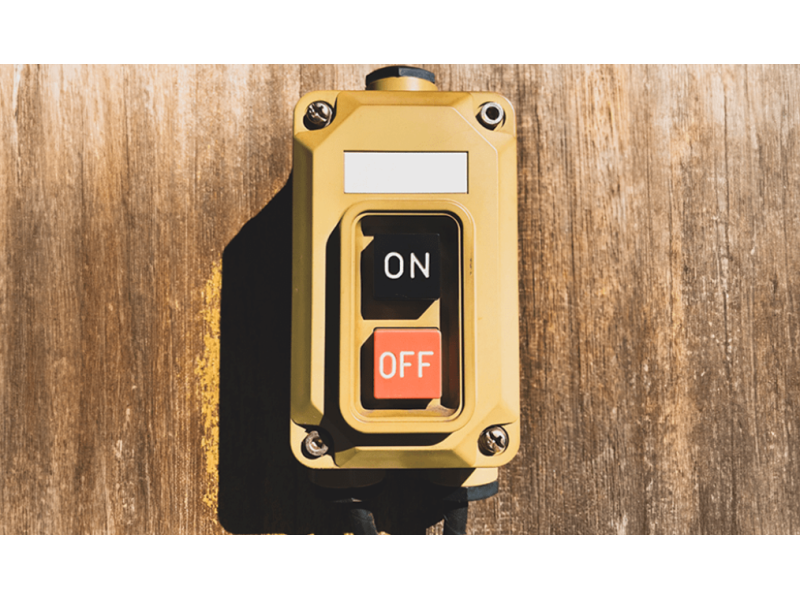
✅ Switches – Light switches, push buttons
✅ Alarm & Security Systems – Fire and intrusion detection
Key Feature: Dry contacts provide galvanic isolation, meaning they separate control and load circuits, preventing interference.
1. How Do Dry Contacts Work?
The function of a dry contact is simple:
When closed, it allows current flow
When open, it interrupts the circuit
These contacts are actuated by an external mechanism, such as:
✅ Electromagnetic force (relays)
✅ Manual operation (switches, buttons)
✅ Environmental triggers (temperature, smoke, vibration sensors)
Since dry contacts do not supply power, the circuit designer determines the applied voltage and current.
2. Dry Contact Applications
Dry contacts are widely used in control, automation, and safety systems.
✔️ 1. Dry Contacts in Relays
Relays use dry contacts to switch circuits on and off using a separate control signal.
Electromagnetic relays – A coil magnetizes to pull the contact closed
Reed relays – Sealed in a vacuum or inert gas for durability
Used in: Industrial automation, HVAC systems, motor control
✔️ 2. Dry Contacts in Fire & Security Systems
Fire and security alarms use dry contacts in sensors and control panels.
Smoke, temperature, motion sensors – Actuate dry contacts when a hazard is detected
Manual alarm switches – Fire alarm pull stations, emergency stop buttons
Advantage: Dry contacts ensure no interference with control signals.
✔️ 3. Dry Contacts in Automation & Industrial Control
Dry contacts are essential in industrial automation to:
✅ Control motors & actuators
✅ Trigger programmable logic controllers (PLCs)
✅ Enable remote monitoring in SCADA systems
Example: A conveyor belt stops when a sensor activates a dry contact.
3. Dry Contact Wiring & Circuit Design
Dry contacts are typically wired in series or parallel with electrical loads.
✔️ Basic Wiring Schematic
A dry contact switch is inserted in-line with a circuit, controlling power flow:
Shop this topicRelated products from Safsale
Continue from Academy guidance to live equipment and components available on Safsale.
Browse Electrical Controls and Accessories