
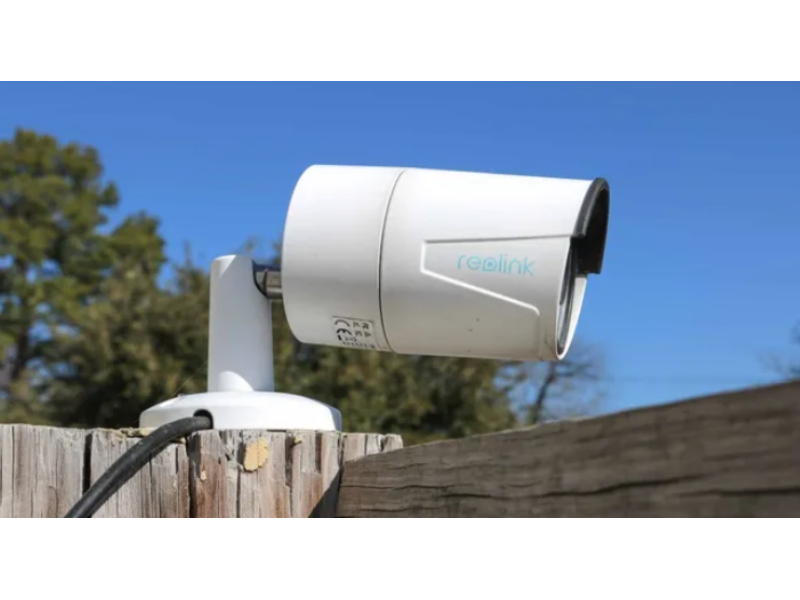
Wired Security Cameras: A Reliable Choice
Wired security cameras remain a cornerstone of video surveillance systems, valued for their dependability and cost-effectiveness. Despite requiring more extensive installation efforts, their benefits often outweigh the drawbacks, especially in environments requiring stable and uninterrupted monitoring.
Advantages of Wired Security Cameras
Stable Connection:
Wired systems are resistant to electromagnetic interference and provide consistent video quality, making them ideal for environments with high wireless traffic.Long-Distance Capability:
- Analog cameras: Signal transmission over 1 kilometer using coaxial cables or twisted pairs.
- IP cameras: Require network switches every 100 meters, but outperform wireless options in range and stability.
Cost-Effectiveness:
- Lower initial equipment costs compared to wireless systems with similar capabilities.
- Reduced maintenance expenses over time.
Security and Privacy:
Wired connections are inherently more secure, reducing the risk of unauthorized access or data interception.Simplicity:
Analog wired cameras are straightforward to install and maintain, often requiring minimal configuration.
Popular Types of Wired Cameras
Mini Cameras:
Ideal for covert installations, these compact cameras can be integrated into walls, ceilings, or everyday objects.Types:
- Cylindrical: Easy to embed in walls or ceilings.
- Rectangular (Cube): Compact and versatile.
- Modular (Bodiless): Perfect for custom setups.
Applications:
- Discreet home or office surveillance.
- Professional installations requiring concealed monitoring.
IP Cameras:
Wired IP cameras outperform wireless alternatives in data transmission, offering:- High reliability in signal strength.
- Support for PoE (Power over Ethernet): Simplifies installation by combining power and data in one cable.
Installation and Maintenance of Wired Systems
Infrastructure Setup:
- Wired cameras require cable runs, which can increase initial costs but ensure long-term reliability.
- Use shielded cables to minimize external interference and ensure signal integrity.
Power Supply Considerations:
- IP cameras with PoE simplify wiring needs, reducing installation time and costs.
- Ensure adequate power supply for analog or IP cameras to handle long cable runs.
Data Security:
- Physical cables reduce the risk of data breaches compared to wireless transmissions.
- Use encryption for IP-based systems to further enhance security.
Why Choose Wired Cameras Over Wireless?
While wireless cameras offer convenience, wired systems excel in reliability, stability, and cost-efficiency. For applications requiring:
- Long-term installations with minimal maintenance.
- High-security environments where data protection is paramount.
- High-traffic areas prone to wireless interference.
Wired cameras provide the perfect solution.
Conclusion
Wired security cameras continue to be a trusted option for home, office, and industrial surveillance. With their robust performance and minimal interference, they remain the go-to choice for dependable and secure monitoring. Proper installation and maintenance will ensure these systems deliver superior results for years to come.
Related products from Safsale
Continue from Academy guidance to live equipment and components available on Safsale.
 Alpha RAP-2150-500 500 Meter Roll of 2 Conductor CableView product
  Windy City/Smart Wire 659116DB-500 Siamese Type RG 59/U Non-Plenum, Direct Burial Cable, 500ftView product
  Alpha CB-7004 1000 ft. 4-Pair 22AWG 7000 Series WireView product
  Alpha RAP-2150 100 Meter Roll of 2 Conductor CableView product