
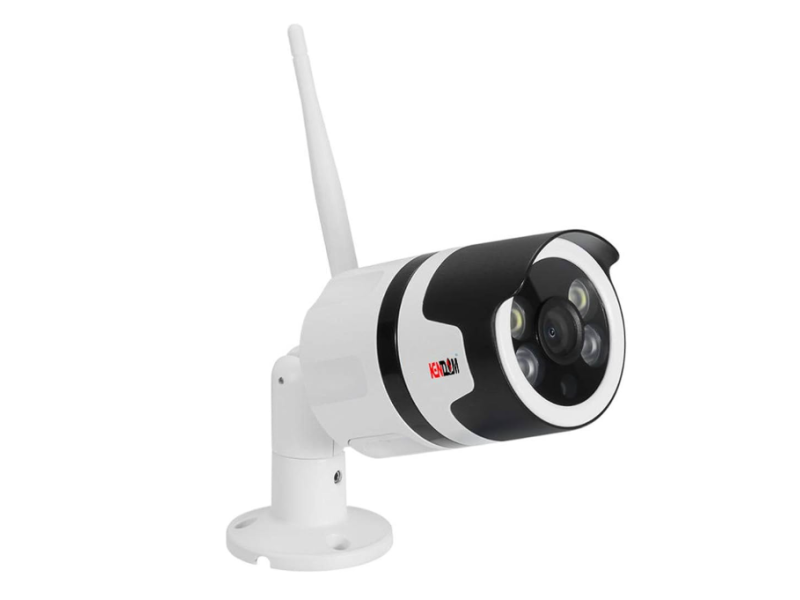
Why Choose Wireless Surveillance Cameras?
Wireless cameras offer several advantages over traditional wired systems, making them a popular choice for modern security setups.
Key Benefits:
- Ease of Installation:
- No need for extensive wiring, preserving interior and exterior aesthetics.
- Flexibility:
- Easily relocate cameras to adjust the surveillance area.
- Cost Efficiency:
- Save on wiring and installation costs.
Drawbacks to Consider:
- Power Supply Challenges:
- Cameras still require power, often necessitating nearby electrical outlets or frequent battery replacements.
- Limited Range:
- Wireless signals typically have a range of 100 meters in open spaces.
- Signal Interference:
- Susceptible to electromagnetic disruptions, reducing reliability in some environments.
Types of Wireless Surveillance Cameras
1. Analog Wireless Cameras
- Operate similarly to traditional television signals.
- Limited range and functionality but cost-effective for basic setups.
2. WiFi Cameras
- Use WiFi networks for data transmission, compatible with most routers.
- Ideal for homes and small businesses.
3. GSM Cameras
- Transmit data via cellular networks, providing wide coverage within the service area.
4. Wireless Web Cameras
- Often bundled with USB receivers and software for plug-and-play functionality.
Wireless Cameras for Home Use
Indoor Applications
- Home Monitoring:
- Ideal for keeping an eye on children or pets.
- Remote Viewing:
- Use IP cameras with cloud services to access footage from anywhere.
Setup Options:
- WiFi Cameras:
- Connect directly to your home router for real-time monitoring and recording.
- Analog Wireless Cameras:
- Simpler systems for viewing live feeds, often compatible with TVs.
Cloud-Based Systems
- Benefits:
- No need for separate storage devices.
- Access recordings from any internet-enabled device.
Outdoor Wireless Surveillance Cameras
Challenges
- Signal Range:
- Structures like walls and weather conditions can interfere with signal strength.
- Power Supply:
- Outdoor installations often require long-lasting power solutions.
Types
- WiFi Outdoor Cameras:
- Great for monitoring driveways, yards, or parked vehicles.
- IP Cameras with Enclosures:
- Designed for harsh weather conditions with added heating or cooling systems.
Specialized Wireless Options
Miniature Wireless Cameras
- Compact and discreet for covert monitoring.
- Drawbacks include limited range and power efficiency.
Complete Wireless Camera Kits
- Bundled packages for ease of installation, often including cameras, receivers, and storage solutions.
Applications
- Residential Security: Monitor entrances and driveways.
- Construction Sites: Mobile setups that adapt to shifting layouts.
Considerations for Choosing Wireless Cameras
- Environment:
- Indoor or outdoor, with weatherproof options for outdoor setups.
- Signal Stability:
- Check for potential interference in the installation area.
- Power Supply:
- Plan for reliable and efficient power solutions.
- Features:
- Motion detection, night vision, and cloud connectivity for added convenience.
Wireless surveillance cameras provide flexibility and convenience, making them a great choice for various security needs. Whether for home monitoring or outdoor applications, selecting the right type ensures optimal performance and peace of mind.
Shop this topic
Browse Cables & Wires Related products from Safsale
Continue from Academy guidance to live equipment and components available on Safsale.
 Alpha RAP-2150-500 500 Meter Roll of 2 Conductor CableView product
  Windy City/Smart Wire 659116DB-500 Siamese Type RG 59/U Non-Plenum, Direct Burial Cable, 500ftView product
  Alpha CB-7004 1000 ft. 4-Pair 22AWG 7000 Series WireView product
  Alpha RAP-2150 100 Meter Roll of 2 Conductor CableView product
GSM and 3G Surveillance Cameras
11/01/2025