La traducción está en preparación. Algunos textos aún se muestran en inglés.
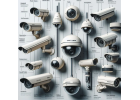
Cámaras de vigilancia: para exteriores, para interiores y características clave

Cámaras de vigilancia: para exteriores, para interiores y características clave

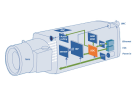
Las cámaras de vigilancia son esenciales para transformar imágenes ópticas en señales eléctricas, permitiendo la monitorización y grabación en tiempo real para una mayor seguridad. Estos sistemas vienen en dos tipos principales: analógico y IP (red) Cámaras.

Mientras las cámaras analógicas transmiten vídeo a través de cables coaxiales, cámaras IP funcionan como dispositivos de red, capaces de transmitir datos a través de Internet o redes locales.


Tipos de cámaras de vigilancia

Cámaras de vigilancia para exteriores

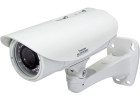
Las cámaras para exteriores están diseñadas para soportar ambientes duros y requieren:

  • Protección del polvo y del agua: Mínimo IP66.
  • Resistencia a la temperatura: Algunos modelos incluyen sistemas de calefacción o refrigeración.
  • Características antivandales: Carcasas duraderas para proteger contra daños intencionales.

Las instalaciones para exteriores pueden enfrentar desafíos únicos como condiciones climáticas extremas, caída de escombros o vandalismo, lo que hace que las soluciones de montaje robustas y seguras sean críticas.

Cámaras de vigilancia para interiores

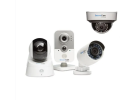
Las cámaras para interiores son ampliamente utilizadas en hogares, oficinas y espacios públicos. Los diseños comunes incluyen:

  1. Cámaras de domo:

    • El diseño elegante minimiza la interrupción de la estética interior.
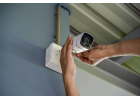
    • Fácilmente instalado en techos o paredes con cableado oculto.
  2. Cámaras de cilindros: Ofrece enfoque ajustable y son ideal para las áreas objetivo.

  3. Cámaras en miniatura: Perfecto para monitoreo discreto o instalaciones ocultas.


Características clave de las cámaras de vigilancia

1. Resolución y claridad

  • Las opciones estándar van desde 2MP (1080p) a 8MP (4K), con resoluciones más altas ofreciendo mayor detalle.

2. Sensibilidad a la luz (rating Lux)

  • Indica la iluminación mínima requerida para el funcionamiento. Las bajas calificaciones de lux significan un mejor rendimiento en condiciones de poca luz.

3. Señal a ruido Ratio (S/N)

  • Una mayor proporción (>45 dB) garantiza imágenes claras con un mínimo de ruido.

4. Características automáticas:

  • Auto-Iris (AR): Se ajusta a las condiciones cambiantes de la luz.
  • Obturador electrónico (ES): Controla la exposición a la luz para obtener imágenes más claras.
  • Compensación de retroiluminación (BLC): Previene las sombras al ver contra la luz brillante.

5. infrarrojo (IR) Capacidades

  • Es esencial para la visión nocturna, permitiendo el monitoreo en la oscuridad completa.

6. Protección contra el tiempo y los daños

  • Las cámaras para exteriores deben tener carcasas robustas para la protección contra el clima y el vandalismo.

Elegir la cámara adecuada para sus necesidades

  1. Medio ambiente: ¿para interiores o para exteriores? Asegúrese de que las calificaciones IP adecuadas para la resistencia al tiempo.
  2. Objeto: Identificar el objetivo (por ejemplo, monitoreo general, reconocimiento facial, lectura de matrícula).
  3. Presupuesto: Las cámaras analógicas suelen ser más asequibles, mientras que cámaras IP ofrecen escalabilidad y funciones avanzadas.
  4. Conectividad: Decida entre sistemas cableados, inalámbricos o híbridos basados en infraestructura y facilidad de instalación.

Conclusión

Las cámaras de vigilancia son una piedra angular de los sistemas de seguridad modernos y ofrecen diversas opciones para diversas necesidades. Comprender los tipos, características y requisitos de instalación garantiza que elija el sistema adecuado para su entorno.

Invertir en cámaras de calidad e instalación adecuada no sólo mejora la seguridad, sino que también proporciona tranquilidad, ya sea en casa, en la oficina o al aire libre.
Smart Link Academy Cámaras de vigilancia: para exteriores, para interiores y características clave 182 articles in this section

Outdoor Camera Planning: Three Scene Tests for Gates, Courtyards, and Parking Lots
Guía 10/28/2026 39
Outdoor Camera Planning: Three Scene Tests for Gates, Courtyards, and Parking Lots
Safsale Editorial · U.S. Field GuidesA parking lot, a courtyard, and a vehicle entrance can occupy the same property while demanding different camera designs. Start with three scene worksheets instead of assuming one outdoor model will cover every location.Gate worksheet: capture the transactionReco..
Leer artículo
Corrosion-Resistant Cameras: Specify the Entire Installation
Guía 10/28/2026 30
Corrosion-Resistant Cameras: Specify the Entire Installation
Safsale Editorial · U.S. Field GuidesA corrosion-resistant camera can still fail as part of a poorly specified installation. The bracket, fasteners, cable entry, connector, and mounting surface all face the same environment. Treat the complete assembly as the purchasing unit.Name the exposure precis..
Leer artículo
How Security Cameras Work: Sensors, Video Signals, Networks, and Night Vision
Guía 10/23/2026 36
How Security Cameras Work: Sensors, Video Signals, Networks, and Night Vision
A security camera turns light from a scene into a video signal. The surrounding system transports that signal, displays it, and preserves recordings when storage is configured. Understanding those separate jobs helps you choose equipment that fits the location instead of expecting the camera alone t..
Leer artículo
Connecting Security Cameras to Monitors, TVs, Computers, and Multiple Displays
Guía 10/23/2026 45
Connecting Security Cameras to Monitors, TVs, Computers, and Multiple Displays
Security video can be viewed on a dedicated monitor, a television, a computer, a tablet, or a phone. The connection method depends on the signal the camera produces and the equipment that receives it. A connector that physically fits does not necessarily carry a compatible signal. Before buying a sc..
Leer artículo
Office Video Surveillance: Camera Selection, Storage, Privacy, and Installation
Guía 10/23/2026 54
Office Video Surveillance: Camera Selection, Storage, Privacy, and Installation
An office surveillance system should answer a practical question: what do you need to see, when do you need to see it, and what will you do with the recording? A camera that gives a useful overview of a lobby may be unsuitable for identifying someone at a distant doorway. A convenient phone app does..
Leer artículo
Comparing Security Cameras from Chinese Manufacturers: Features and Specification Checks
Guía 10/23/2026 54
Comparing Security Cameras from Chinese Manufacturers: Features and Specification Checks
A security camera can support monitoring at a home, garage, office, warehouse, school, or industrial site. Choosing one by brand, price, or country of manufacture alone is not enough. The camera must provide the right view, preserve useful detail under the actual lighting, connect to a supported rec..
Leer artículo
Home IP Cameras: Eight Early Designs and Lessons in Easy Remote Access
Guía 10/23/2026 37
Home IP Cameras: Eight Early Designs and Lessons in Easy Remote Access
A home or small-office network camera should be easy to install, easy to view, and able to preserve the footage its owner actually needs. Compact size matters, but a small camera is of limited use if setup requires obscure router changes or if recordings cannot be retrieved after an incident. Conven..
Leer artículo
Choosing IP Cameras: Model Examples, Optics, Storage, and Installation
Guía 10/23/2026 43
Choosing IP Cameras: Model Examples, Optics, Storage, and Installation
Choosing an IP camera starts with a scene and a task. A camera that gives a useful overview of a room may not show a readable license plate across a parking lot. A model that works well indoors may fail outdoors because of moisture, temperature, corrosion, or poor cable protection. Resolution, lens ..
Leer artículo
Body-Worn Cameras: Four Historical Designs and Evidence Management Lessons
Guía 10/23/2026 37
Body-Worn Cameras: Four Historical Designs and Evidence Management Lessons
A body-worn camera combines a small video recorder, a microphone, a battery, and an attachment for clothing or equipment. It can document an employee's interaction with a customer, a security patrol, a delivery, or a law-enforcement encounter. Unlike a fixed camera, it travels with its wearer and ca..
Leer artículo
What Is an IP Camera? Imaging, Network Protocols, Storage, and Camera Types
Guía 10/23/2026 34
What Is an IP Camera? Imaging, Network Protocols, Storage, and Camera Types
An IP camera combines an imaging device with a small networked computer. It captures a scene, processes the image, compresses the video, and sends data using Internet Protocol. The system includes a lens, an image sensor, processing and encoding functions, memory, and a network interface. Several of..
Leer artículo
How to Choose Security Camera Resolution: Pixels, Lenses, and Real Detail
Guía 10/23/2026 35
How to Choose Security Camera Resolution: Pixels, Lenses, and Real Detail
More megapixels can help a security camera capture useful detail, but they do not guarantee a readable face or license plate. A wide lens, poor lighting, motion blur, an unsuitable viewing angle, or aggressive compression can defeat a high-resolution sensor. Conversely, a well-positioned 1080p came..
Leer artículo
How Outdoor Security Cameras Work: Imaging, Weather Protection, and Recording
Guía 10/23/2026 26
How Outdoor Security Cameras Work: Imaging, Weather Protection, and Recording
An outdoor security camera turns light from a scene into a video signal, processes that image, and sends or saves it for viewing. Its basic imaging process resembles an indoor camera's, but the installation must also handle rain, dust, temperature changes, sunlight, darkness, and exposed cable conn..
Leer artículo
Comparing IP Cameras by Price and Performance: A Practical Scoring Method
Guía 10/23/2026 25
Comparing IP Cameras by Price and Performance: A Practical Scoring Method
IP cameras vary widely in price, image performance, environmental protection, and software features. A weighted comparison can make those differences easier to discuss, but it cannot turn a specification sheet into a complete measure of quality. The starting point is the job each camera must perform..
Leer artículo
How to Connect an IP Security Camera: Planning, Wiring, and Setup
Guía 10/23/2026 35
How to Connect an IP Security Camera: Planning, Wiring, and Setup
A small camera system can help you check an entrance, review an incident, or keep an eye on pets while you are away. Connecting it successfully involves more than making a live picture appear. The camera needs suitable power, a reliable network path, secure credentials, and a recording destination t..
Leer artículo
Choosing Outdoor Security Cameras: Protection, Coverage, Storage, and Model Examples
Guía 10/23/2026 34
Choosing Outdoor Security Cameras: Protection, Coverage, Storage, and Model Examples
An outdoor camera should remain usable in the site's weather and produce the detail needed at the right location, both during the day and after dark. The best choice depends on the task: a yard overview, an entrance image, a gate approach, and a parking-lot investigation may require different views ..
Leer artículo
Choosing a Surveillance Microphone: Speech Quality, Compatibility, and Recording Rules
Guía 10/23/2026 27
Choosing a Surveillance Microphone: Speech Quality, Compatibility, and Recording Rules
A microphone can add useful context to a security recording when audio collection is appropriate and lawful. It may clarify a call for help, a conversation at an authorized service point, or an unusual sound associated with an incident. It is not automatically as necessary as the camera, and it shou..
Leer artículo
Outdoor Analog or IP Cameras: Coverage, Wiring, Night Images, and Storage
Guía 10/23/2026 25
Outdoor Analog or IP Cameras: Coverage, Wiring, Night Images, and Storage
An outdoor surveillance system should answer a specific question: do you need to see that someone entered a yard, identify a person at a doorway, read a vehicle plate, or follow activity across a parking lot? These are different imaging tasks. Buying a camera and mounting it high on a wall does not ..
Leer artículo
Connecting a Hikvision Camera Microphone: Audio, Network, and Remote Access
Guía 10/23/2026 31
Connecting a Hikvision Camera Microphone: Audio, Network, and Remote Access
Video shows where an incident happened, but useful sounds may explain what the picture leaves out. A call for help, breaking glass, or a conversation can add context to an authorized security recording. Adding a microphone to a compatible Hikvision camera or recorder therefore starts with two questi..
Leer artículo
Surveillance Memory Cards: Calculate Endurance, Capacity, and Write Speed
Guía 10/23/2026 27
Surveillance Memory Cards: Calculate Endurance, Capacity, and Write Speed
A security camera can write video for hours or days without stopping, then overwrite its oldest recordings and begin again. That workload differs from occasional photographs or short clips. A suitable memory card must have enough usable capacity, sustained write performance, and documented endurance..
Leer artículo
Indoor Security Camera Field of View: Coverage, Detail, and Recording
Guía 10/23/2026 41
Indoor Security Camera Field of View: Coverage, Detail, and Recording
An indoor camera can show a whole room yet provide too little detail to recognize a person at its far end. Another camera may capture an excellent doorway view while missing most of the room. Field of view is the link between these two outcomes: it determines how much space enters the image and how ..
Leer artículo
Choosing a Security Camera: Coverage, Image Quality, Power, and Storage
Guía 10/23/2026 31
Choosing a Security Camera: Coverage, Image Quality, Power, and Storage
Choosing a security camera begins with a practical question: what must the recording let you see? A camera that provides an overview of a room may not show a face clearly at the doorway. A camera that performs well in daylight may struggle with a moving person after dark. The right choice connects c..
Leer artículo
Motorized Camera Lenses: Four Archived Zoom and Autofocus Tests
Guía 10/23/2026 26
Motorized Camera Lenses: Four Archived Zoom and Autofocus Tests
A motorized lens lets an installer adjust a security camera's field of view and focus without physically turning rings on the lens. That can be useful when a camera is mounted high above the ground or in another difficult-to-reach location. The feature is common in PTZ designs and also appears in fi..
Leer artículo
Six Early Four-Megapixel Bullet Cameras: An Archived Feature Comparison
Guía 10/23/2026 18
Six Early Four-Megapixel Bullet Cameras: An Archived Feature Comparison
Four-megapixel bullet cameras became an attractive alternative to two-megapixel models as sensors, processors, and compression improved. This archived review captures that transition through six examples with varifocal lenses. It preserves the original feature comparisons while separating historical..
Leer artículo
Six Fisheye Cameras: An Archived Comparison of Coverage and Dewarping
Guía 10/23/2026 25
Six Fisheye Cameras: An Archived Comparison of Coverage and Dewarping
A fisheye camera can provide a broad view of a room from one mounting point, but a 360-degree view does not automatically provide useful identification detail everywhere. This archived comparison examines six cameras and the differences that mattered in the original evaluation: edge sharpness, dewar..
Leer artículo
Showing 1 to 24 of 182 (8 Pages)