התרגום נמצא בהכנה. חלק מהטקסטים עדיין מוצגים באנגלית.
Introduction to Electronics: Basics of Current, Voltage, and Resistance

Beginner’s Guide to Electronics: Understanding Current, Voltage & Resistance

1️⃣ What is Electronics?

Electronics is the science of controlling electrical energy through various components to perform useful tasks, such as lighting up LEDs, powering motors, or processing signals in computers.

This guide will introduce the fundamental concepts of electronics in a simple and practical way.

To begin working with circuits, you need to understand three key electrical properties:

✔ Current (I) – The flow of electric charge
✔ Voltage (U or V) – The force that pushes the charge through a circuit
✔ Resistance (R) – The opposition to current flow

These three parameters define how electrical components interact in a circuit.


2️⃣ What is Electric Current?

Electric current (I) is the movement of charged particles (electrons) through a conductor (wire).

Definition:
Current is the rate at which electric charge flows through a conductor.

✔ Measured in Amperes (A)
✔ Symbolized as I
✔ Can be direct current (DC) or alternating current (AC)

Example of Current Flow:
If you connect a battery to a light bulb, the battery provides energy to push electrons through the circuit, making the bulb glow.

Current only flows in a closed circuit! If the circuit is broken, no electricity moves.


3️⃣ What is Voltage?

Voltage (U or V) is the electric potential difference between two points in a circuit. It’s like pressure that pushes electrons through a conductor.

Definition:
Voltage is the force that drives electrical current through a circuit.

✔ Measured in Volts (V)
✔ Symbolized as U or V
✔ Provided by batteries, generators, solar panels

Example:
A 9V battery has a potential difference of 9 volts between its terminals. If you connect a circuit, current will flow due to this voltage.


4️⃣ What is Resistance?

Resistance (R) is the opposition to the flow of electric current in a material. It determines how much current flows for a given voltage.

Definition:
Resistance is the property of a material that reduces current flow.

✔ Measured in Ohms (Ω)
✔ Symbolized as R
✔ Depends on material, length, thickness, and temperature

Example:
A thin wire has higher resistance than a thick wire, making it harder for current to flow.

✔ Metals like copper = low resistance (good conductors)
✔ Rubber or plastic = high resistance (good insulators)

Practical Impact of Resistance:
✔ High resistance – More heat, energy loss (used in heaters)
✔ Low resistance – Efficient energy transfer (used in power cables)


5️⃣ Relationship Between Current, Voltage & Resistance (Ohm’s Law)

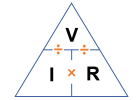
Ohm’s Law describes how these three properties interact:

I=URI = \frac{U}{R}

where:
✔ I – Current (A)
✔ U (V) – Voltage (V)
✔ R – Resistance (Ω)

Example Calculation:
A 9V battery is connected to a 1.5kΩ resistor. How much current flows?

I=9V1500Ω=0.006A=6mAI = \frac{9V}{1500Ω} = 0.006A = 6mA

✔ The circuit will have a 6mA current flow.


6️⃣ How Electricity is Used in Practical Circuits

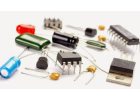
Common Electronic Components:

✔ Resistors – Limit current flow
✔ Capacitors – Store electrical charge
✔ Transistors – Act as electronic switches
✔ LEDs – Emit light when current flows
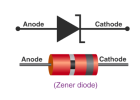
✔ Diodes – Allow current to flow in one direction only

Real-World Applications:

✔ Light bulbs convert electrical energy into light
✔ Electric heaters convert electricity into heat
✔ Motors use electricity to create motion


7️⃣ Units of Measurement in Electronics

 Standard Units

כמותSymbolUnit NameCommon Prefixes
CurrentIAmperes (A)mA (milliamp) = 0.001A
VoltageU or VVolts (V)kV (kilovolt) = 1000V
ResistanceROhms (Ω)kΩ (kilo-ohm) = 1000Ω

Smaller currents and larger resistances are common in electronics, so milliamperes (mA) and kilo-ohms (kΩ) are often used.


8️⃣ Conclusion: Getting Started with Electronics

✔ Understanding Current, Voltage, and Resistance is essential for working with electronics
✔ Electricity requires a closed circuit to flow
✔ Ohm’s Law helps calculate electrical values
✔ Electronics involve components like resistors, capacitors, and transistors

Next Steps:
✔ Start with simple circuits using batteries and LEDs
✔ Experiment with Ohm’s Law calculations
✔ Learn about basic electronic components and how they work together

Master these basics, and you’ll be on your way to building your own electronic projects!
Smart Link Academy Electronics 12 articles in this section

WiMAX in Spring 2006: Early Wireless Broadband and Last-Mile Lessons
Guide 10/23/2026 26
WiMAX in Spring 2006: Early Wireless Broadband and Last-Mile Lessons
In spring 2006, wireless broadband promised to change how offices, homes, and mobile computers reached the internet. WiMAX was one of the most visible candidates. Manufacturers were demonstrating compact subscriber equipment, operators were announcing city networks, and industry discussions increas..
קרא מאמר
WiMAX in 2005: The Broadband Vision and Lessons for Network Design
Guide 10/22/2026 32
WiMAX in 2005: The Broadband Vision and Lessons for Network Design
In the mid-2000s, WiMAX was presented as a way to extend broadband access beyond the reach of cable and DSL. The idea was attractive: use standards-based wireless links to connect homes, businesses, and local networks across a wider area than a conventional Wi-Fi access point could serve. This artic..
קרא מאמר
H.264 Versus DivX in 2005: What an Early Compression Test Teaches
Guide 10/22/2026 35
H.264 Versus DivX in 2005: What an Early Compression Test Teaches
Video recording hardware illustrates the storage context; it was not part of the 2005 codec test.In 2005, affordable DVD writers were changing home video storage. A single-layer DVD held substantially more material than a CD, reducing the number of discs needed for an archive. DVD authoring software..
קרא מאמר
How to Test a Diode Bridge with a Multimeter: Step-by-Step
Guide 02/27/2025 500
How to Test a Diode Bridge with a Multimeter: Step-by-Step
How to Test a Diode Bridge with a Multimeter: Step-by-StepA diode bridge (bridge rectifier) is a configuration of four diodes arranged to convert AC to DC. Testing a diode bridge ensures it is functioning correctly by verifying each diode’s conduction in the forward direction and blocking in reverse..
קרא מאמר
Bridge Rectifier: Working Principle, Circuit & Applications
Guide 02/27/2025 438
Bridge Rectifier: Working Principle, Circuit & Applications
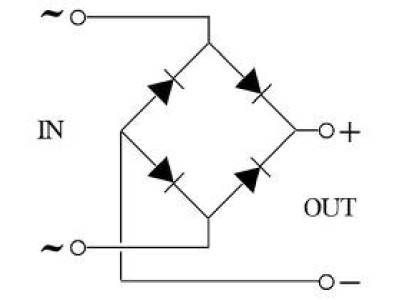
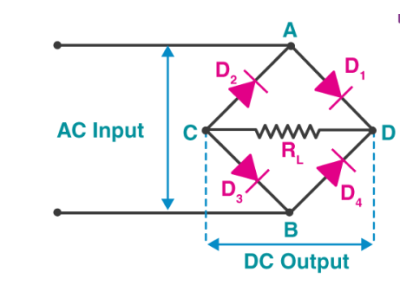
How a Bridge Rectifier Works: Circuit, Function & Applications1. What Is a Bridge Rectifier?A bridge rectifier is a circuit composed of four diodes that converts alternating current (AC) into direct current (DC). It is commonly used in power supplies to provide stable DC voltage from an AC sourc..
קרא מאמר
How to Test a Diode with a Multimeter: Step-by-Step Guide
Guide 02/27/2025 545
How to Test a Diode with a Multimeter: Step-by-Step Guide
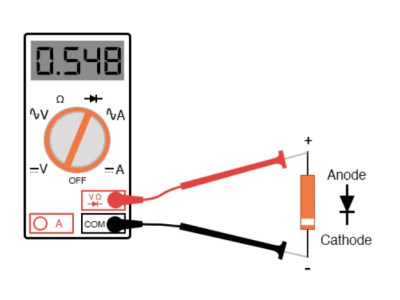
Testing a Diode with a Multimeter: Methods and Interpretation1. Why Test a Diode?A diode conducts current in only one direction. To determine if a diode is working properly, we test:✔ Forward bias (should conduct)✔ Reverse bias (should block current)A faulty diode may be:❌ Open (no conduction in bot..
קרא מאמר
How to Calculate a Resistor for an LED
Guide 02/27/2025 466
How to Calculate a Resistor for an LED
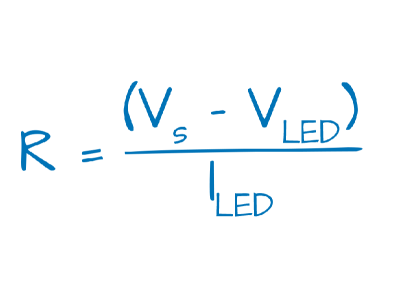
Resistor Calculation for LEDs: Step-by-Step Guide1. Why Do LEDs Need a Resistor?An LED (Light Emitting Diode) requires a resistor to:✔ Limit the current to prevent burnout✔ Ensure consistent brightness✔ Match voltage supply with LED voltage dropWithout a resistor, the LED can overheat and fail due t..
קרא מאמר
How to Reduce Voltage Using a Resistor
Guide 02/27/2025 456
How to Reduce Voltage Using a Resistor
Voltage Reduction with a Resistor: Calculation & Application1. Can a Resistor Reduce Voltage?Yes, a resistor can reduce voltage, but this method is mainly suitable for low-power applications due to energy losses.Common Uses:✔ LED current limiting✔ Reference voltage generation✔ Load protection fr..
קרא מאמר
How to Build and Calculate a Voltage Divider with Resistors
Guide 02/27/2025 424
How to Build and Calculate a Voltage Divider with Resistors
Voltage Divider with Resistors: Calculation and Application1. What is a Voltage Divider?A voltage divider is a simple circuit used to reduce voltage to a lower value in a predictable ratio. It consists of two or more resistors connected in series, with the output voltage taken from the middle connec..
קרא מאמר
Understanding Mixed Resistor Connections: Series-Parallel Circuits
Guide 02/27/2025 345
Understanding Mixed Resistor Connections: Series-Parallel Circuits
✔ Current is Inversely Proportional to Resistance:I1I2=R2R1\\frac{I_1}{I_2} = \\frac{R_2}{R_1}I2​I1​​=R1​R2​​Example CalculationThree resistors (10Ω, 20Ω, and 30Ω) are connected in parallel to a 12V power source.✔ Total Resistance Calculation:1Rtotal=110Ω+120Ω+130Ω\\frac{1}{R_{\\text{total}}} = \\fr..
קרא מאמר
Types of Resistor Connections: Series, Parallel, and Mixed
Guide 02/27/2025 381
Types of Resistor Connections: Series, Parallel, and Mixed
Understanding Resistor Connections: Series, Parallel, and Mixed Circuits1. Introduction: Why Resistor Connections MatterResistors can be connected in different ways in circuits to control voltage, current, and power distribution. The three main types of resistor connections are:✔ Series Connection –..
קרא מאמר
Electronics for Beginners
Guide 01/06/2025 300
Electronics for Beginners
Electronics for BeginnersWhen you start exploring electronics, it's important to grasp a few basic concepts, such as current, voltage, and resistance, and understand how they interact. We'll focus on practical applications, keeping the theory simple to help you get started.What Is Current, Voltage, ..
קרא מאמר
Showing 1 to 12 of 12 (1 Pages)